


Note: This is a live blog. Email versions won’t update—open this post in your browser or the Substack app and refresh for new entries throughout the day.
🟢 Closing summary: We’re wrapping live coverage for today. Thanks for following along.
Here’s a quick recap of the day:
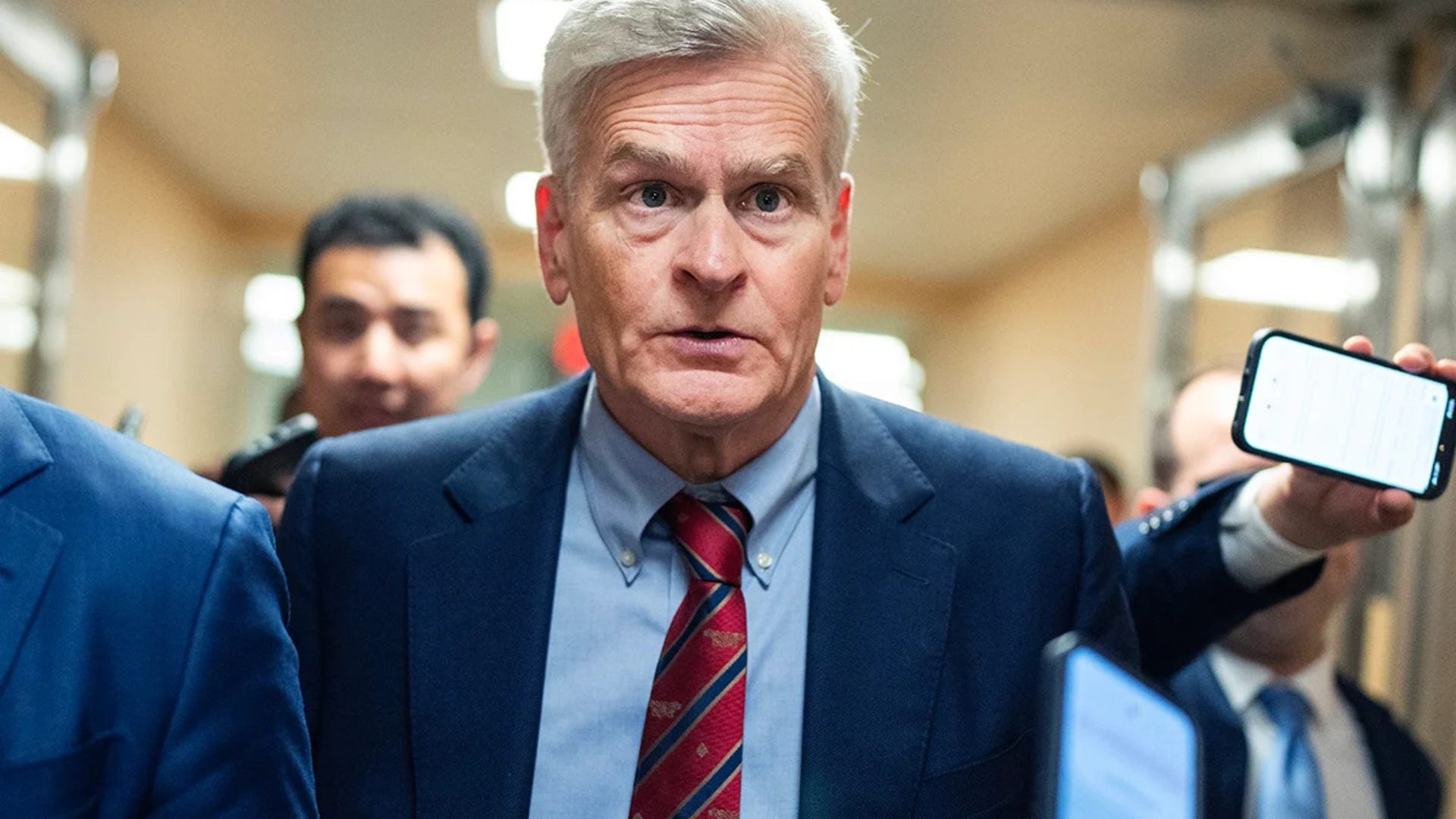
Sen. Bill Cassidy said he will vote to confirm Todd Blanche as attorney general, giving President Donald Trump’s nominee the pivotal Republican support he needed and likely clearing the way for Blanche to reach 50 votes. Read the full update.
Cassidy’s decision came hours after Sen. Lisa Murkowski announced she would oppose Blanche, saying the “politicization—even weaponization” of the Justice Department has accelerated under Trump and that she lacked confidence Blanche could “check the worst impulses of this administration.” Read the full update.
A federal appeals court blocked construction of Trump’s $400 million White House ballroom, dealing another setback to the controversial project built on the site of the demolished East Wing. Trump quickly vowed to “immediately” appeal the ruling to the Supreme Court. Read my full report.
U.S. employers unexpectedly lost 23,000 jobs in July, while job gains for May and June were revised sharply lower, extending a summer slowdown in hiring amid the ongoing conflict in the Middle East. The unemployment rate held at 4.1%, far below economists’ expectation of 83,000 new jobs. Read the full update.
Live coverage for this blog has ended, but you can scroll back through the feed for the full timeline, analysis and every key development as it unfolded.

A Quick Ask: Because Independent Journalism Does Not Fund Itself.
Press freedom does not survive on vibes. It survives because readers decide the work is worth protecting. The Developer is independent, ad-free, and reader-funded—which means your support goes directly into the reporting, not into some billionaire’s pocket. If my work helps you stay informed, consider upgrading to paid: $8/month or $80/year. If upgrading isn’t possible right now, sharing The Developer with someone who needs to read it matters just as much. Help keep independent journalism alive and impossible to buy.
🔵 ANALYSIS (7:18 p.m. ET): Trump’s New Birthright Citizenship Orders Face Steep Legal Hurdles After Supreme Court Defeat
Donald Trump’s latest attempt to restrict birthright citizenship is already facing serious constitutional questions, with legal experts warning that the administration’s renewed attack on so-called “birth tourism” appears to collide directly with the Supreme Court’s ruling just weeks ago.
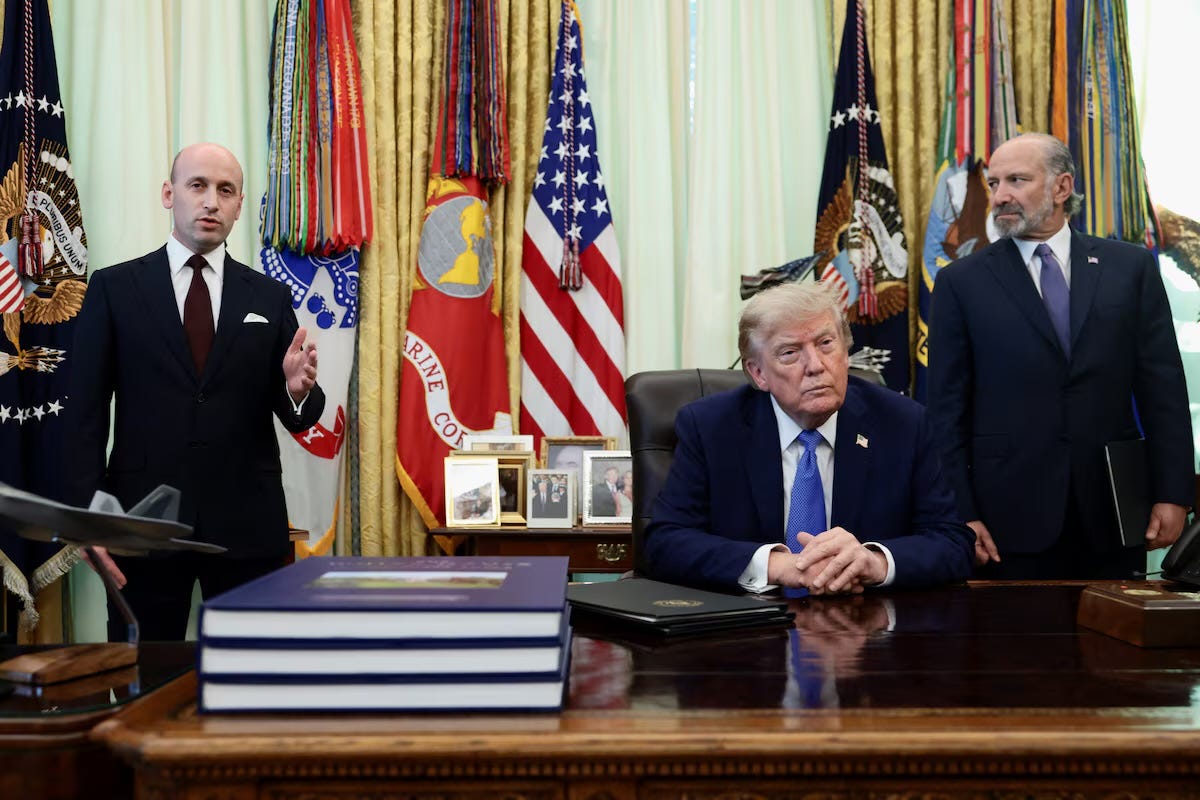
Trump signed two executive orders Thursday aimed largely at children born in the United States to foreign nationals who travel here to give birth. One directs federal agencies not to recognize a child’s citizenship if either parent is deemed to have engaged in fraudulent activity to obtain citizenship, while the second seeks to deny visas to foreigners suspected of traveling to the U.S. for that purpose.
The central legal problem is the Supreme Court’s June 30 decision in Trump v. Barbara. In a 6-3 ruling, the justices held that children born in the United States to parents who are unlawfully or temporarily present are citizens at birth under the 14th Amendment.
Justice Samuel Alito underscored the breadth of that holding in dissent, complaining that the majority’s reasoning extended citizenship even to children born to women who enter the country briefly for the purpose of giving birth. That language could make it particularly difficult for the administration to argue that “birth tourism” falls outside the ruling.
University of Virginia law professor Amanda Frost said the administration’s fraud theory does not change the constitutional analysis.
“These children are citizens based on their birth on U.S. soil,” she said.
“Illegal conduct by their parent can have no bearing on their status.”
The new orders go further than birth tourism. Trump is also seeking to expand the historically narrow exceptions to automatic citizenship—which have included children of foreign diplomats and enemy forces occupying U.S. territory—to cover some foreign government employees and people the administration classifies as foreign terrorists. Legal scholars are divided over whether those narrower provisions could survive court challenges.
That distinction could become central to the next round of litigation: Trump’s renewed birth-tourism restrictions appear to run squarely into the Supreme Court’s June ruling, while some of the administration’s proposed expansions involving diplomats, foreign government officials, or hostile forces may present less settled constitutional questions.
The orders are expected to trigger another round of lawsuits over the meaning of the 14th Amendment and how far a president can go in redefining who receives citizenship at birth after the Supreme Court has already rejected a broader version of the policy.
*This is a developing story. This article will be updated as more information becomes available.
🔴 BREAKING (1:55 p.m. ET): Trump Vows Immediate Supreme Court Appeal After Court Blocks White House Ballroom
President Donald Trump said Friday that his administration will “immediately” appeal to the U.S. Supreme Court after a federal appeals court blocked above-ground construction of his $400 million White House ballroom, escalating the fight over whether he can undertake the massive project without congressional approval.
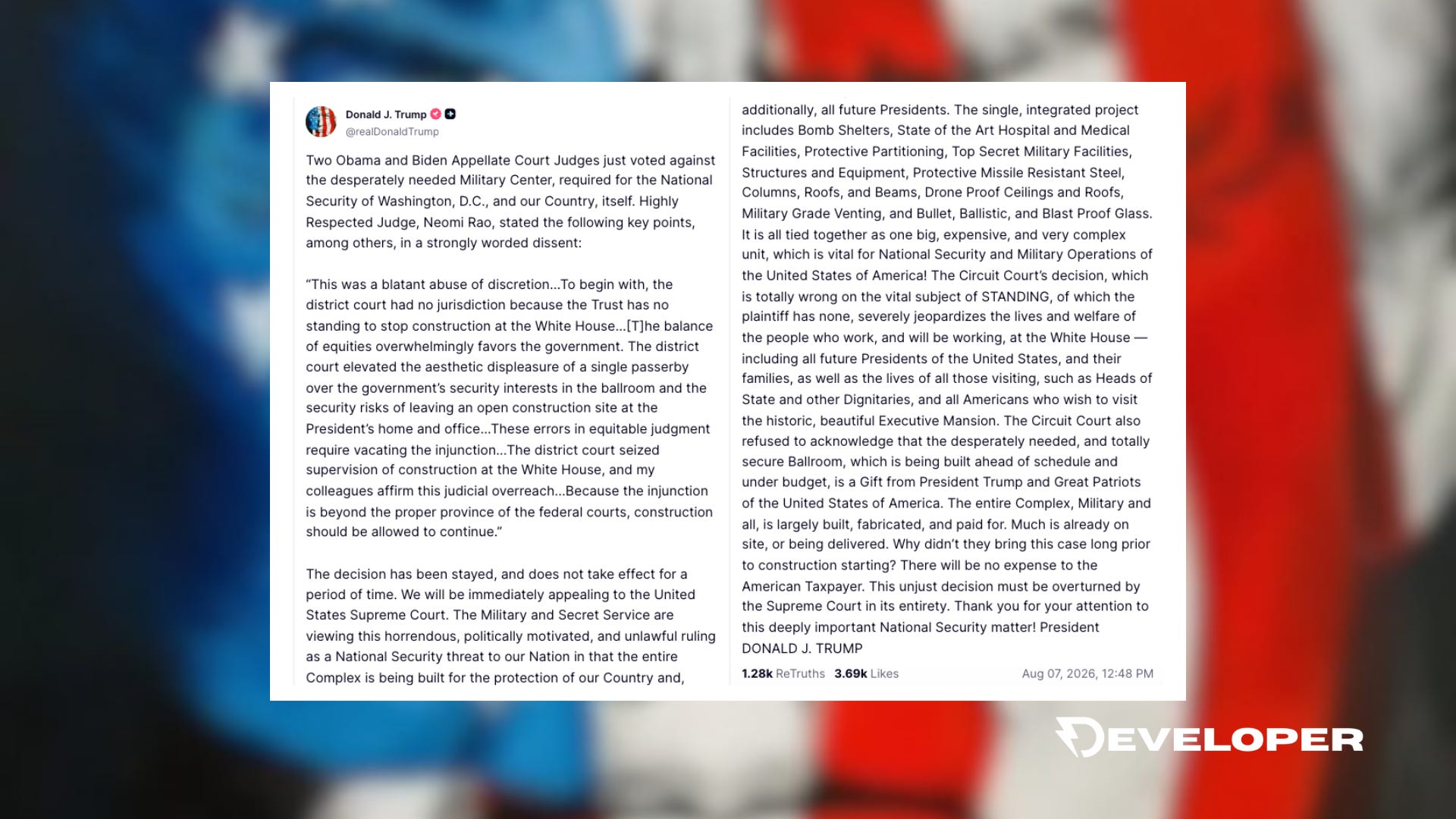
In an exhaustingly long Truth Social post, Trump defended the complex, which he said includes a “desperately needed military center” alongside a new “totally secure” ballroom, and cast the court’s ruling as a threat to national security.
“The Military and Secret Service are viewing this horrendous, politically motivated, and unlawful ruling as a National Security threat to our Nation,” Trump wrote, stressing that the project is privately financed. “Much is already on site, or being delivered … There will be no expense to the American Taxpayer. This unjust decision must be overturned by the Supreme Court in its entirety.”
The declaration comes hours after a divided 2-1 panel of the U.S. Court of Appeals for the District of Columbia Circuit upheld an injunction blocking above-ground construction on the site of the demolished East Wing. The majority concluded that Trump cannot fundamentally reshape the White House without congressional authorization, writing that “Each President is a temporary tenant, not the owner, of the White House.”
The appeals court put its ruling on hold for 14 days specifically to give the administration time to seek Supreme Court review, meaning construction is not required to stop immediately while Trump pursues the appeal.
The coming Supreme Court fight could determine whether a president may dramatically reconstruct portions of the White House using privately raised money without first receiving approval from Congress.
*This is a developing story. This article will be updated as more information becomes available.
🔴 BREAKING (1:17 p.m. ET): Trump Launches New Effort to Fire Fed Governor Lisa Cook After Supreme Court Setback
President Donald Trump is moving forward with a new attempt to remove Federal Reserve Gov. Lisa Cook, weeks after the Supreme Court blocked his first effort and ruled that she had not received the process required before a president can fire a Fed governor for cause.
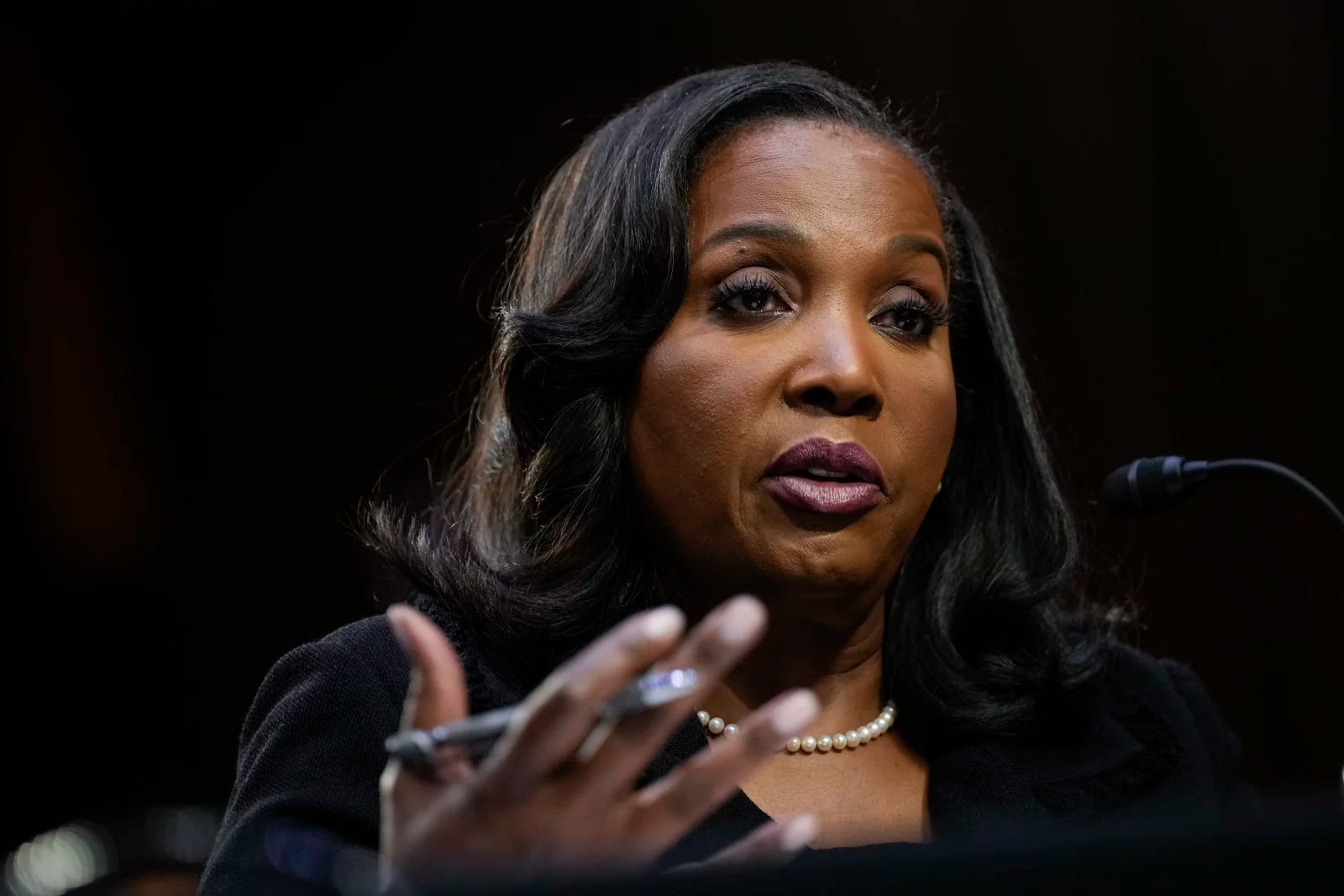
The White House notified Cook in a letter this week that Trump is “considering” removing her from the Federal Reserve Board of Governors and gave her three weeks to respond to allegations of mortgage fraud that remain unproven and untested in court. The letter reportedly initiates a new removal process based on alleged “gross negligence.”
The move appears designed to follow the procedural roadmap laid out by the Supreme Court when its 5-4 majority refused in June to allow Trump to immediately remove Cook. The justices did not determine whether the underlying allegations constitute sufficient “cause” to fire her, instead ruling that Trump had failed to provide Cook with adequate notice and an opportunity to answer the accusations.
“The court decides this application on the narrow ground that the president failed to afford Cook the procedural protections to which she was entitled by statute. Without such protections, she could not properly dispute the charges the president laid against her,” the justices said.
Chief Justice John Roberts made clear that the president could try again once those protections were provided.
“Only after Cook has had the opportunity to respond to the charges made against her ... may a final decision be made,” Roberts wrote.
“And only then can the courts assess the validity and sufficiency of such charges.”
The court’s opinion explicitly said its injunction did “not ... forbid the President from trying again, if he chooses to do so.”
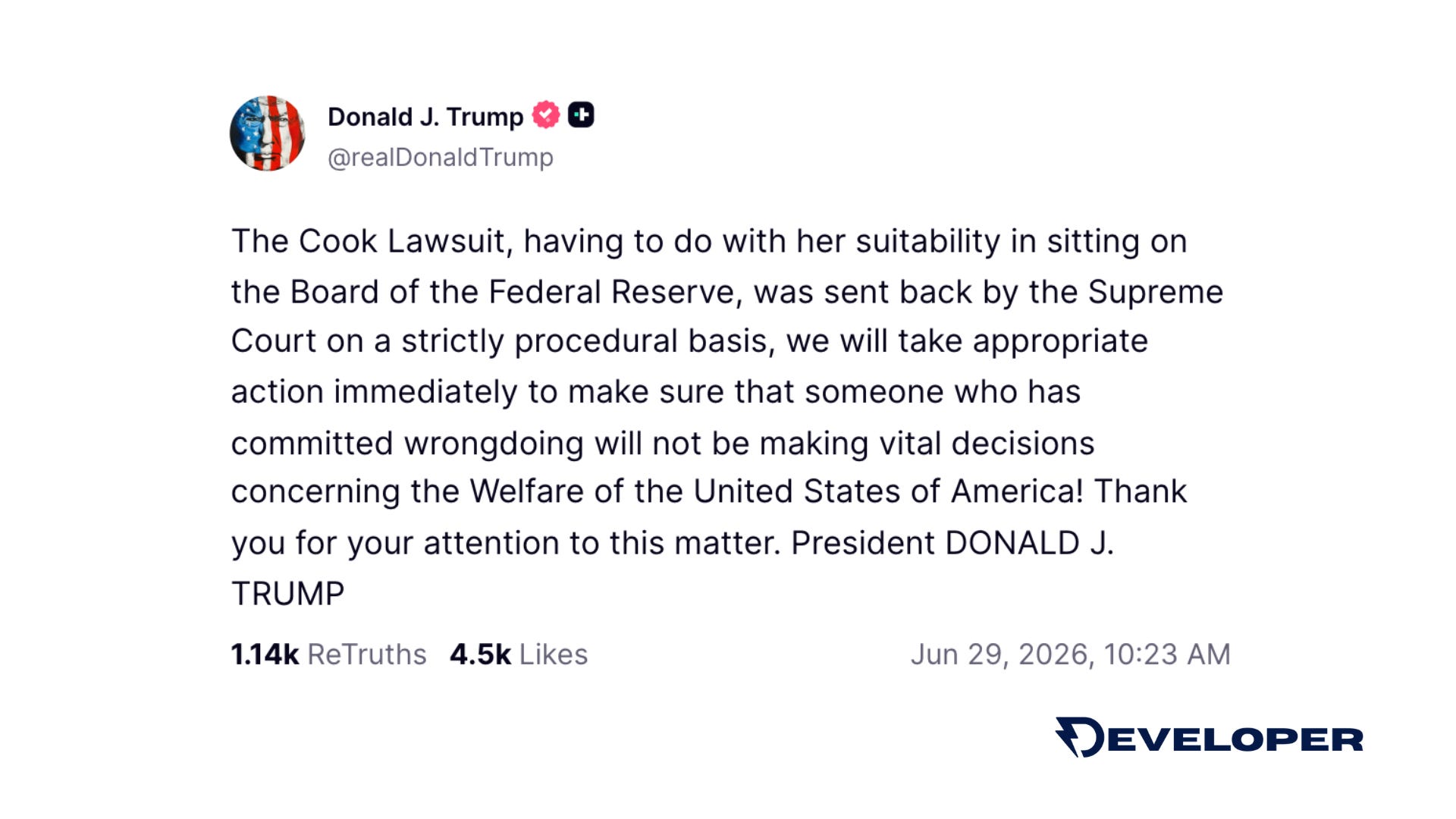
Trump vowed after the ruling that he would “take appropriate action immediately” to remove Cook, and the new letter appears to put that threat into motion. Cook has denied wrongdoing and has never been charged with a crime. Her attorney, Abbe Lowell, said the allegations remain “baseless” and vowed to challenge the renewed effort to remove her.
The renewed confrontation could send the case back into court and force judges to address a question the Supreme Court deliberately left unresolved in June: whether the allegations against Cook actually satisfy the Federal Reserve Act’s “for cause” standard for removing a governor. The outcome could carry major consequences for the Fed’s longstanding independence from direct presidential control.
*This is a developing story. This article will be updated as more information becomes available.
🔴 BREAKING (12:35 p.m. ET): Judge Clears Way for Trump Administration to End Deportation Protections for South Sudanese Nationals
A federal judge in Boston has cleared the way for the Trump administration to terminate Temporary Protected Status for hundreds of South Sudanese nationals, rejecting a last-ditch effort to preserve protections that allow them to remain and work legally in the United States.
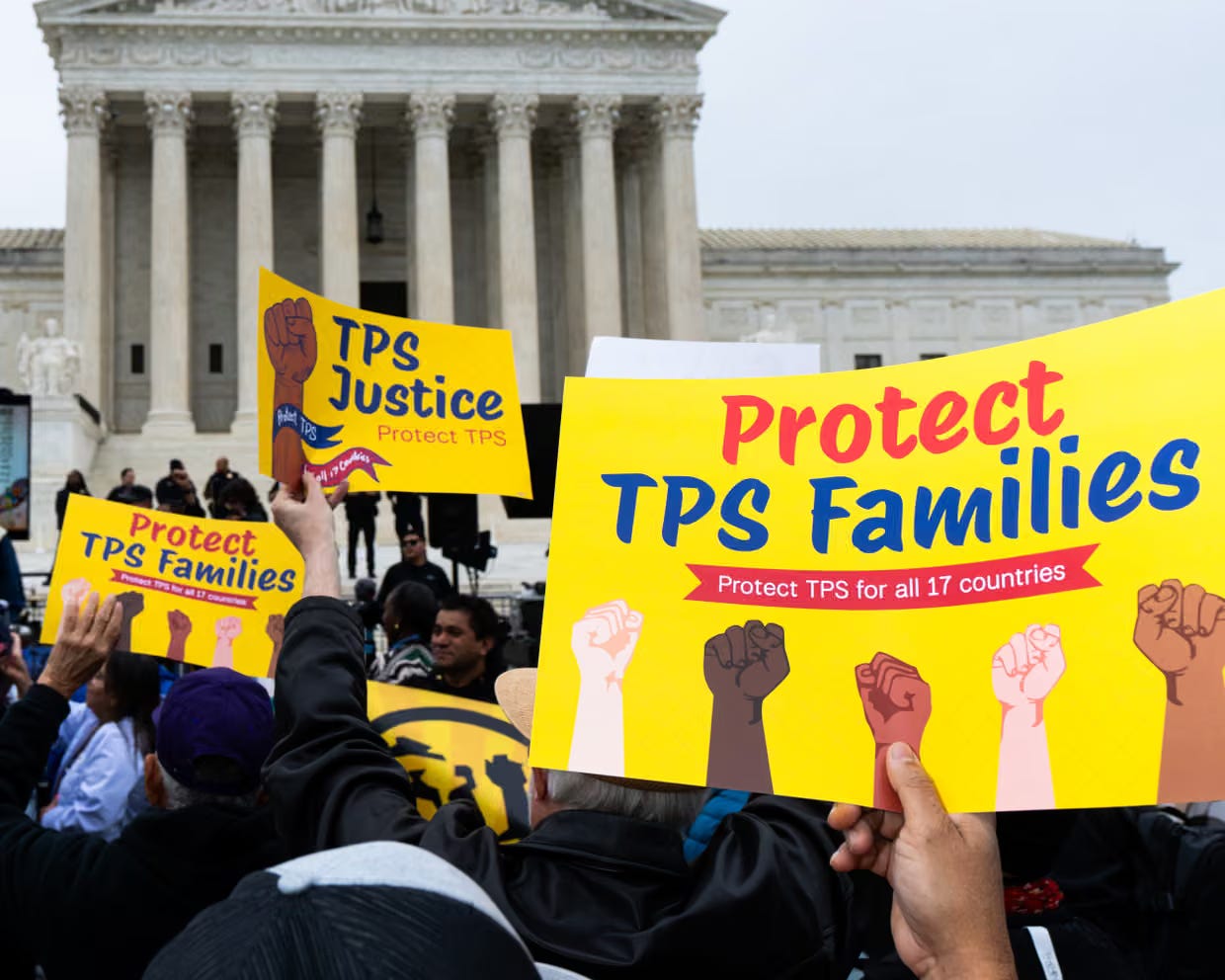
U.S. District Judge Patti Saris rejected a renewed challenge brought by South Sudanese nationals and African Communities Together after the Supreme Court ruled 6-3 in June in Mullin v. Doe that federal law largely prevents lower courts from reviewing the Department of Homeland Security’s nonconstitutional decisions to terminate TPS designations.
DHS moved last November to end South Sudan’s designation, arguing that the conflict-ridden country no longer satisfied the statutory requirements for TPS. More than 232 South Sudanese nationals currently hold the status, while at least 73 others have applications pending. Saris had previously blocked the termination from taking effect.
After the Supreme Court’s ruling, attorneys for the migrants advanced a new argument: Because the 1990 law creating TPS specifically gave the attorney general authority to extend or terminate designations—and DHS did not exist until 2002—the department lacked legal authority to end South Sudan’s protections.
Saris rejected that argument, concluding that Congress transferred TPS authority to DHS when immigration responsibilities were reorganized following the department’s creation.
She called the challengers’ position a “self-contradictory, self-defeating foundation,” reasoning that if DHS lacked the authority to terminate South Sudan’s TPS designation, it likewise lacked authority to extend it in the first place.
“South Sudan’s original TPS designation would thus be invalid by the same token as its termination,” Saris wrote.
The ruling removes another legal barrier to the Trump administration’s broader campaign to unwind TPS protections across roughly a dozen countries, following the Supreme Court’s June decision allowing similar terminations affecting Haitian and Syrian nationals to move forward.
*This is a developing story. This article will be updated as more information becomes available.
🔴 BREAKING (12:00 p.m. ET): Appeals Court Blocks Trump’s $400 Million White House Ballroom Without Congressional Approval
A divided federal appeals court ruled Friday that President Donald Trump cannot move forward with construction of his $400 million White House ballroom without congressional authorization, handing the administration a major setback in a closely watched fight over the limits of presidential power.
The U.S. Court of Appeals for the District of Columbia Circuit, in a 2-1 decision, upheld a preliminary injunction won by the National Trust for Historic Preservation after the administration demolished the East Wing last year and began constructing the roughly 90,000-square-foot ballroom without first securing approval from Congress. The court upheld the injunction
“Whether or not a massive ballroom should be constructed is for Congress to decide and is not a matter for Executive self-help,” the majority wrote.
“Congress has not ceded unfettered authority to the Executive Branch to dramatically redesign, reshape, and reconstruct the White House—the People’s House—to fit a particular President’s desires.”
The appeals court put its ruling on hold for 14 days, meaning the injunction will not immediately take effect while the administration has an opportunity to ask the U.S. Supreme Court to intervene. The two-week stay for a possible Supreme Court appeal
The decision does not permanently prohibit a ballroom. It holds that Trump cannot undertake a reconstruction of this scale on his own authority while the litigation proceeds without first obtaining congressional approval.
Read my full report here:

*This is a developing story. This article will be updated as more information becomes available.
🔴 BREAKING (10:53 a.m. ET): Cassidy Backs Blanche, Clearing a Path for Attorney General Confirmation
Sen. Bill Cassidy, R-La., announced on the Senate floor Friday that he will vote to confirm Todd Blanche as attorney general, giving President Donald Trump’s nominee the pivotal Republican vote he needed after Sens. Lisa Murkowski and Susan Collins broke with their party.
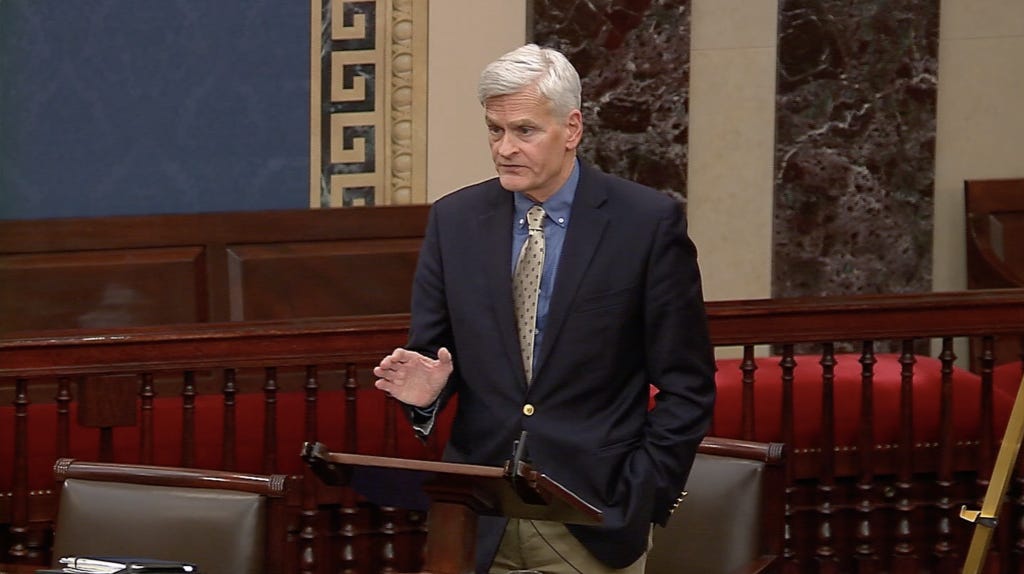
Cassidy’s decision puts Blanche on course for 50 votes with Sen. Mitch McConnell still absent, leaving Vice President JD Vance positioned to break a tie if every Democrat votes against the nomination.
Cassidy delivered his support with unusually pointed criticism of Blanche’s conduct as acting attorney general, particularly his role in approving Trump’s $1.8 billion “anti-weaponization” fund and a related agreement shielding the president’s past tax returns from IRS audits.
“Mr. Blanche showed poor judgment in approving the anti weaponization slush fund, and exempting the president from IRS audits. No American should be unfairly targeted by the law, but no American should be above the law,” Cassidy said.
He also raised concerns about the Justice Department pursuing cases against political opponents.
“I am particularly concerned about episodes of apparent lawfare. DOJ bringing suits against political enemies,” Cassidy said.
“Both parties, presidents of both parties, have been guilty of this. It must stop. It should stop now.”
Cassidy said he remains “not entirely satisfied” with where those concerns stand and acknowledged that Trump can be “unrelenting” in his demands. He argued, however, that installing a Senate-confirmed attorney general could give Blanche greater leverage to resist political pressure inside the Justice Department.
Cassidy also pointed to Blanche’s management of the department and conversations with former Attorney General Bill Barr and two Louisiana U.S. attorneys, who he said strongly supported Blanche’s confirmation.
“Mr. Blanche is not perfect, and he will tell you this. But the choice is not between perfection and Mr. Blanche,” Cassidy said.
“There is between Mr. Blanche and another acting attorney general who may not run the Department effectively under President Trump.”
Cassidy closed by making his decision explicit: “I will vote for Mr. Blanche. I’ll be criticized for this quote. What’s new?”
The announcement effectively removes the last major Republican obstacle to Blanche’s confirmation and represents a significant turnaround for a nomination that appeared at risk only hours earlier after Murkowski announced her opposition.
*This is a developing story. This article will be updated as more information becomes available.
🔴 BREAKING (10:22 a.m. ET): Cassidy Expected to Reveal Position on Blanche Nomination This Hour
Sen. Bill Cassidy, R-La., is expected to announce his position on Todd Blanche’s nomination for attorney general on the Senate floor this hour, potentially deciding whether President Donald Trump’s nominee has enough Republican support to be confirmed.
Cassidy has emerged as the pivotal vote after Sen. Lisa Murkowski announced Friday that she would oppose Blanche, joining Sen. Susan Collins. With Sen. Mitch McConnell still absent, a Cassidy “yes” could leave Blanche with 50 votes and allow Vice President JD Vance to break a tie; a “no” could sink the nomination.
Cassidy has remained publicly undecided, raising questions about Blanche’s ability to lead the Justice Department independently after serving as Trump’s personal attorney.
I’ll bring you Cassidy’s decision and the latest Senate reaction as soon as it comes in.
*This is a developing story. This article will be updated as more information becomes available.
🔴 BREAKING (9:50 a.m. ET): Max Miller Loans Campaign $1 Million as Resignation Calls Mount Over Abuse Allegations
Rep. Max Miller, R-Ohio, plans to lend his reelection campaign $1 million, a major cash infusion that signals he intends to remain in the race despite mounting calls for him to resign and allegations of domestic abuse involving his ex-wife and young daughter.

Miller plans to transfer the money in two $500,000 installments, according to The Wall Street Journal. The money would substantially strengthen his financial position against Democratic challenger Brian Poindexter as pressure grows on the Ohio Republican to abandon his campaign.
The allegations have triggered calls for Miller to step down and prompted scrutiny from House leaders. Miller has denied the accusations and vowed to remain in the race, while the House Ethics Committee has moved toward investigating the allegations.
The seven-figure personal loan is the clearest financial indication yet that Miller is preparing to fight for another term rather than withdraw, even as the controversy surrounding his candidacy intensifies.
*This is a developing story. This article will be updated as more information becomes available.
🔴 BREAKING (9:26 a.m. ET): Murkowski Opposes Blanche, Leaving Cassidy With Decisive Vote on Attorney General Nomination
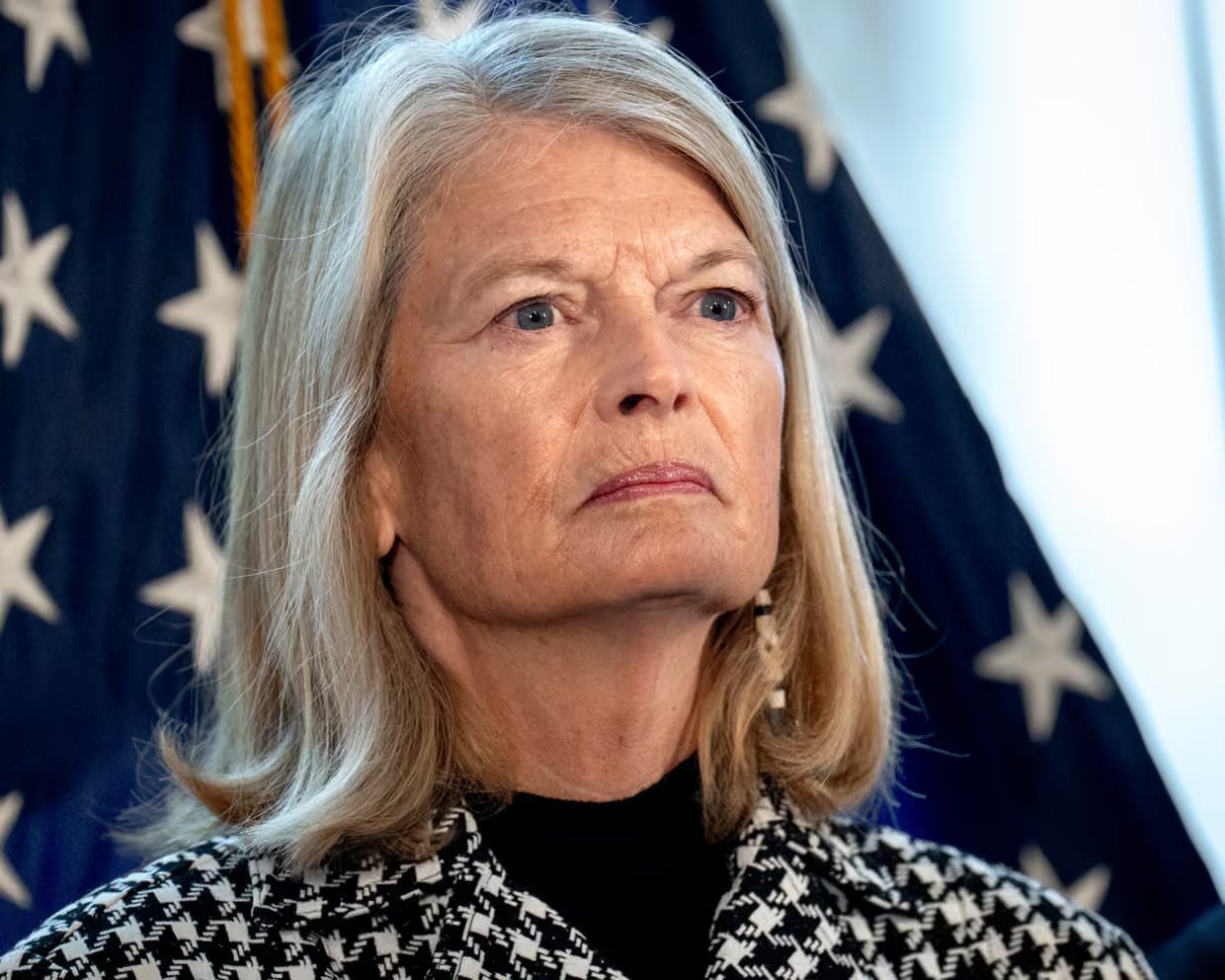
Republican Sen. Lisa Murkowski of Alaska said Friday that she will oppose Todd Blanche’s nomination to serve permanently as attorney general, leaving President Donald Trump’s former personal lawyer with virtually no room for another Republican defection.

“I have had numerous constructive meetings with Mr. Blanche and he comes across as decent and capable,” Murkowski wrote on X.
“Ultimately, however, I will oppose his nomination,” she said.
She added that the “politicization—even weaponization” of the Justice Department has accelerated under Trump and that she lacked confidence Blanche could “check the worst impulses of this administration.”
Murkowski joins Sen. Susan Collins of Maine in opposing Blanche. With Sen. Mitch McConnell still absent from the Senate, Louisiana Sen. Bill Cassidy now effectively holds the decisive Republican vote. Cassidy remains publicly undecided and said Wednesday that his concern is whether Blanche can lead the Justice Department independently after previously representing Trump.
“I’ve got to be convinced that he is an attorney general who just happens to have once been President Trump’s personal attorney, as opposed to President Trump’s personal attorney who is now the attorney general,” Cassidy said.
“I think there’s a big difference between the two.”
If Cassidy votes yes, Blanche could reach 50 votes, allowing Vice President JD Vance to break a tie. If Cassidy joins Murkowski and Collins in opposition, Blanche’s confirmation would fail—a major setback for Trump’s effort to install his acting attorney general permanently.
The nomination had regained momentum after Republican Sens. John Cornyn and Thom Tillis dropped their opposition when Blanche committed in writing to terminating Trump’s $1.8 billion “anti-weaponization” fund and limiting a related tax-immunity agreement to past returns. Both provisions stemmed from the settlement of Trump’s $10 billion lawsuit against the IRS. Questions remain over whether the fund could later be revived and why Trump received an agreement from his own administration that could potentially save him millions of dollars.
Cassidy’s position carries additional political weight. He was one of seven Republican senators who voted to convict Trump during his 2021 impeachment trial after the Jan. 6 attack on the Capitol, and he has repeatedly clashed with Health Secretary Robert F. Kennedy Jr. over vaccine policy. Cassidy lost his Republican primary earlier this year to Trump-backed Rep. Julia Letlow and will leave the Senate when his term expires.
*This is a developing story. This article will be updated as more information becomes available.
🟢 Opening Summary:
WASHINGTON (Aug. 7, 2026) — Hello, and welcome to The Developer’s U.S. news and politics live blog, where we are tracking the latest developments from Washington and across the country, along with our continuing coverage of the war in Iran and its growing economic consequences at home.
The day begins with a significant warning sign for the U.S. labor market. Employers unexpectedly cut 23,000 jobs in July, marking a sharp reversal after hiring had shown signs of rebounding earlier this year. The unemployment rate nevertheless slipped from 4.2% to 4.1%, according to new Labor Department data released Friday.
The headline unemployment figure masks a broader pullback from the workforce. The labor force shrank by roughly 264,000 people in July, while the labor force participation rate edged down to 61.4%. Household employment also declined by 87,000, and the number of Americans outside the labor force increased by 381,000. Since January, the participation rate has fallen 0.7 percentage point.
The latest report also substantially weakened the picture painted by the previous two months. May payroll growth was revised down by 66,000, from 129,000 jobs to 63,000, while June was cut by 37,000, from 57,000 to just 20,000. Together, the revisions erased 103,000 jobs from earlier estimates.
The losses were concentrated in several parts of the economy. Local government education shed 50,000 jobs, retail trade lost 19,000, and financial activities continued to weaken, losing another 14,000. Health care remained a source of growth, adding 22,000 jobs, though at a slower pace than over the previous year.
The deterioration comes as businesses and households continue to absorb higher energy costs tied to months of conflict in the Persian Gulf. Gasoline prices climbed above $4 a gallon nationally in late July, nearly $1 higher than a year earlier, adding pressure to household budgets and operating costs for businesses.
Hiring had regained some momentum earlier in 2026 following a lackluster 2025, even as employers confronted a complicated economy shaped by higher energy prices, persistent labor shortages in some industries, and companies increasingly turning to technology and automation to perform work once handled by employees. Friday’s report raises new questions about whether that resilience is beginning to crack.
This live blog will be updated frequently as new developments come in, so check back and refresh the page for the latest.
A Quick Ask: Because Independent Journalism Does Not Fund Itself.
Press freedom does not survive on vibes. It survives because readers decide the work is worth protecting. The Developer is independent, ad-free, and reader-funded—which means your support goes directly into the reporting, not into some billionaire’s pocket. If my work helps you stay informed, consider upgrading to paid: $8/month or $80/year. If upgrading isn’t possible right now, sharing The Developer with someone who needs to read it matters just as much. Help keep independent journalism alive and impossible to buy.


Unemployment doesn’t fall when jobs are cut. People who exhausted unemployment benefits, and are not employed may not be included in this number.
Useless MF’er.