



Note: This is a live blog. Email versions won’t update—open this post in your browser or the Substack app and refresh for new entries throughout the day.
🟢 We’re wrapping live coverage for today. Thanks for following along.
Live coverage for this blog has ended, but you can scroll back through the feed for the full timeline, analysis and every key development as it unfolded.

A Quick Ask: Because Independent Journalism Does Not Fund Itself.
Press freedom does not survive on vibes. It survives because readers decide the work is worth protecting. The Developer is independent, ad-free, and reader-funded—which means your support goes directly into the reporting, not into some billionaire’s pocket. If my work helps you stay informed, consider upgrading to paid: $8/month or $80/year. If upgrading isn’t possible right now, sharing The Developer with someone who needs to read it matters just as much. Help keep independent journalism alive and impossible to buy.
🔴 BREAKING (6:58 p.m. ET): Army Secretary Dan Driscoll resigns amid reported rift with Hegseth
Army Secretary Dan Driscoll is stepping down after 18 months, the White House confirmed Monday, marking the latest high-level departure during a widening shakeup of the military’s leadership.
Driscoll submitted his resignation after months of friction with Defense Secretary Pete Hegseth over the direction of the service and the removal of senior Army officers. The White House did not provide an official reason for his departure or announce a successor.
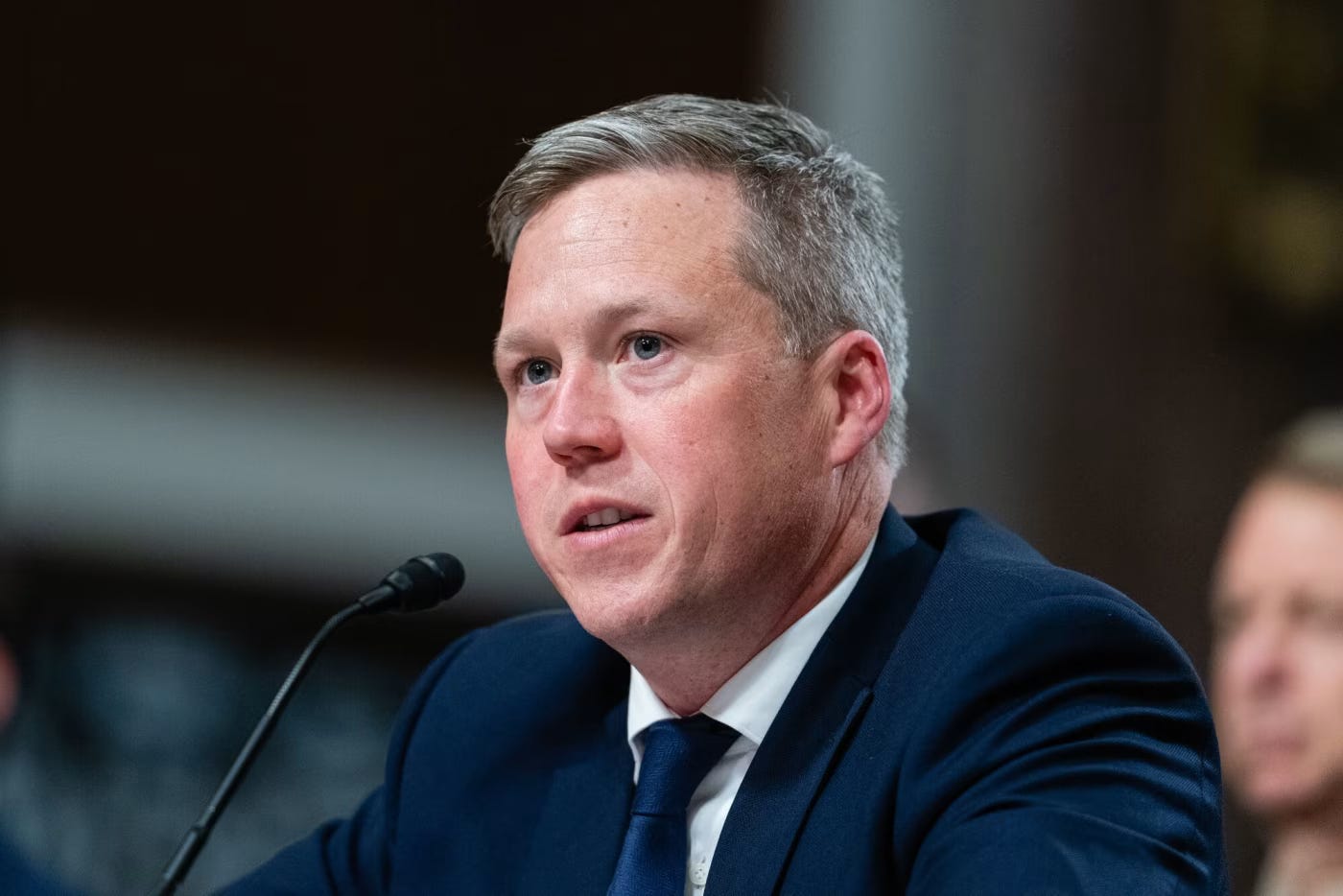
Hegseth forced Army Chief of Staff Gen. Randy George to step down in April, while Gen. Christopher Donahue, the Army’s commander in Europe and Africa, unexpectedly left his post in June. Driscoll was a close George ally and publicly lamented his removal.
A friend, former adviser, and Yale Law School classmate of Vice President JD Vance, Driscoll is an Iraq war veteran and technology investor. He became the U.S. government’s unlikely point person in negotiations between Russia and Ukraine despite having little experience in international diplomacy.
Driscoll also pushed the Army to accelerate its adoption of drones, counter-drone systems, and other emerging military technology by cutting years from traditional testing and procurement schedules. Under acting Army Chief of Staff Gen. Christopher LaNeve, however, the service is now dismantling at least one drone-modernization program that Driscoll had championed.
🟢 Update (2:41 p.m. ET): Pentagon says Hegseth sees formal military objections ‘constantly’ as it attacks readiness report
The Pentagon’s top spokesman acknowledged that Defense Secretary Pete Hegseth regularly receives—and proceeds despite—formal objections from senior commanders as he sought to discredit reporting from the Washington Post that military leaders warned against prolonging U.S. operations in the Iran war.


“Of course, we demand candid military advice,” Sean Parnell wrote on X.
“Non-concurs are standard. The Secretary sees them constantly. That’s how you run a real military.”
Parnell was responding to an account of four four-star generals and admirals who formally objected to extending forces drawn from Europe, Asia, Latin America, and the Navy to support the U.S. operation in the Middle East. More than 50,000 American troops have remained on alert in the region, with some deployments running through September and others potentially continuing into 2027.
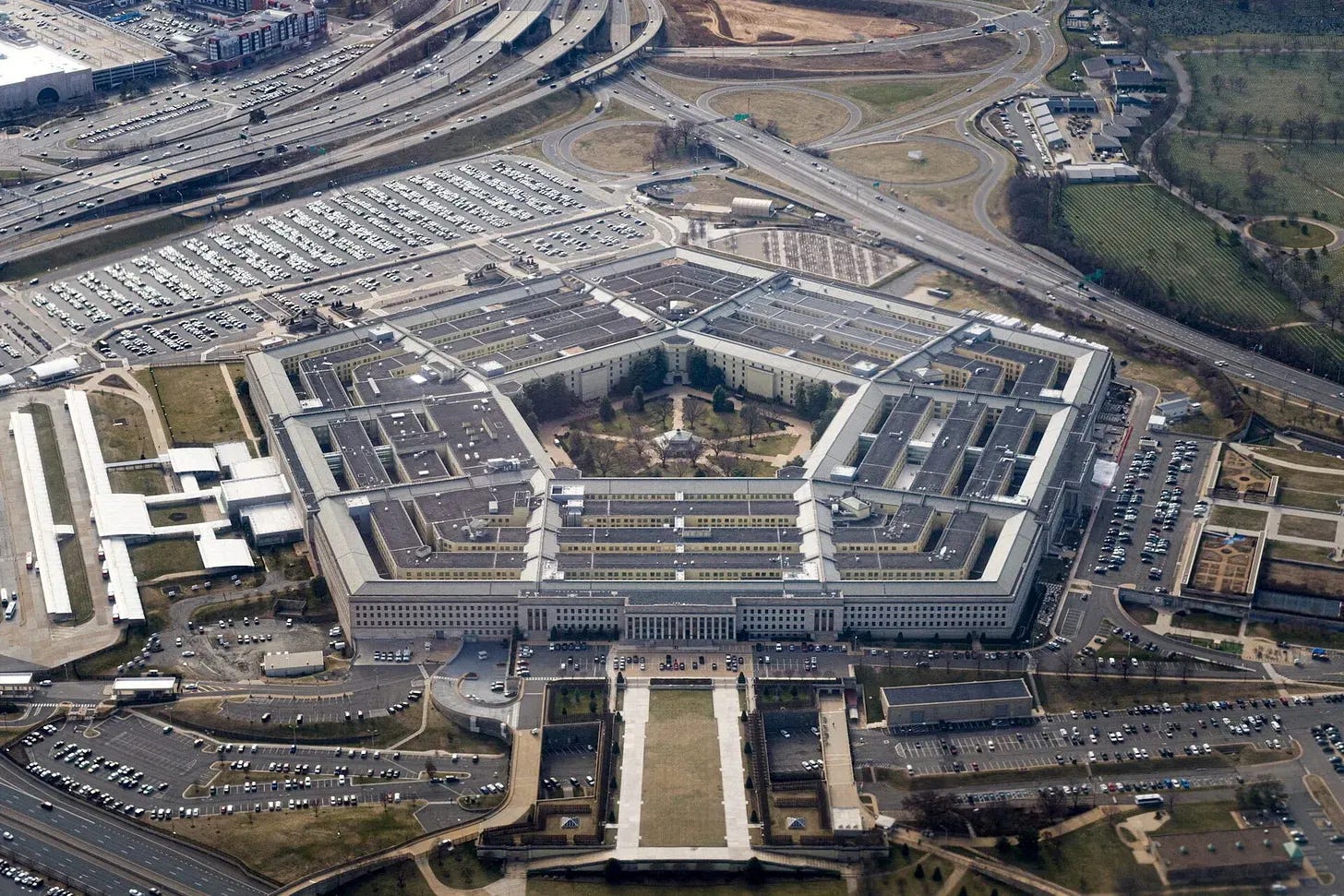
Although Parnell attacked the report, he did not dispute that the commanders filed the “non-concurs” or that Hegseth routinely receives such objections before moving forward with military orders.
“Publishing highly classified assessments from the Secretary’s orders book is a crime,” he wrote.
“It’s a betrayal of the force. And much of what they’re publishing is inaccurate … We are in great shape around the world. This story isn’t about readiness. It’s TDS and PDS – they hate President Trump and Secretary Hegseth more than they love America.”
Parnell did not identify which reported details the Pentagon considered inaccurate.
His criminality claim also blurred the legal distinction between leaking classified information and publishing it. Government employees can face prosecution for unauthorized disclosures, but the Supreme Court’s landmark 1971 Pentagon Papers decision rejected the government’s effort to stop The New York Times and The Washington Post from publishing classified material because it failed to overcome the heavy presumption against prior restraint.
That ruling did not give news organizations blanket immunity to publish any classified information under all circumstances, but it established a formidable First Amendment barrier against government attempts to block publication in advance. An attached community note cited the decision in response to Parnell’s accusation.
🔵 ANALYSIS (12:48 p.m. ET): Oil climbs more than 2% as U.S.-Iran attacks reignite supply fears
Oil prices surged more than 2% Monday as the renewal of military attacks between the United States and Iran revived fears of further disruptions to global energy supplies moving through the Strait of Hormuz.

Brent crude futures were up $2.37, or 2.69%, at $90.47 a barrel as of 10:54 a.m. ET. U.S. West Texas Intermediate crude rose $2, or 2.4%, to $85.40 a barrel.
Brent climbed as high as $91.52 earlier Monday—its highest level since Aug. 25—after U.S. forces struck two Iranian launchers on Larak Island and Tehran retaliated by targeting American military bases in Jordan.
The renewed exchange marked the first significant military action between the two countries in roughly a month. Traders are again confronting the possibility of deeper disruption around the Strait of Hormuz, which carried about one-fifth of the world’s traded oil before the war restricted shipping traffic.
Despite Monday’s rally, both benchmarks remained on course for modest August losses after falling more than 4% last week. Thin trading during a British public holiday may also have magnified the market’s reaction.
🟢 Update (12:25 p.m. ET): House returns with stopgap spending bill atop GOP agenda
The U.S. House returned to Washington on Monday after a five-week recess, with Republican leaders focused on passing a stopgap spending bill before federal funding expires Sept. 30.

House Speaker Mike Johnson is expected to put the measure on the floor this week. The bill would largely maintain current spending levels through Dec. 11, pushing the next funding deadline beyond the Nov. 3 midterm elections and averting another politically damaging government shutdown.
Johnson is expected to bring the stopgap forward as a suspension bill, a fast-track process that bypasses a separate procedural vote but requires support from two-thirds of members present and voting.
The Senate approved the continuing resolution in a 90-6 vote before beginning its August recess. Senators revised an earlier House proposal and added language temporarily blocking a White House rule that would give political appointees greater authority over federal grants. The measure also would prevent the administration from transferring funds to the Border Patrol.
A provision delaying a federal ban on intoxicating hemp THC products for one month has drawn opposition from some House Republicans, complicating Johnson’s effort to move the package quickly.
The chamber is scheduled to leave Washington again at the end of the week for a Labor Day district work period—giving lawmakers only a narrow window to clear the funding bill and send it to Donald Trump.
🟢 Update (11:54 a.m. ET): Trump says communities opposing data centers risk becoming ‘backwards and poor’
Donald Trump lashed out Monday at the growing nationwide resistance to data centers, arguing that communities rejecting the energy-intensive facilities risk sacrificing jobs, tax revenue, and economic growth.

“The only reason that communities throughout the U.S.A. should not want Data Centers is if they want to end up being backwards and poor,” Trump wrote in a Truth Social post.
He added:
“If they want to be successful and rich, with far lower taxes and jobs all over the place, let Data Reign.”
“The good news is that there are plenty of other places that want them. If we kill the Golden Goose, you will only have yourselves to blame.”
The president’s broadside comes as opposition to data centers—the vast, power-hungry facilities that house the servers and systems behind artificial intelligence and other online services—has hardened across party lines. A recent Heatmap Pro poll found that 75% of Americans would oppose a new data center near their home, including more than six in 10 who said they would strongly oppose it.
At least 14 states have considered temporary construction moratoriums. New York last month enacted the country’s first statewide pause, imposing a one-year moratorium on new hyperscale facilities. Sen. Bernie Sanders and Rep. Alexandria Ocasio-Cortez are pushing for a national pause, while Texas Gov. Greg Abbott—a staunch Republican—has halted some approvals until audits determine how proposed facilities would affect the state’s power grid.
The backlash has placed Trump between two central promises: making the United States the global leader in artificial intelligence, which requires a rapid expansion of computing infrastructure, and lowering electricity costs for households already facing higher utility bills.
“China could not be happier with this anti‑Data Center movement,” Trump wrote.
“Actually, they can’t believe it is happening!”
Trump’s answer has been the “Ratepayer Protection Pledge,” a voluntary agreement under which technology companies, utilities, and developers promise to cover the energy and infrastructure costs created by data centers instead of shifting them to households. The administration said last month that 23 governors and at least 187 companies had signed the pledge.
Environmental advocates and energy-policy experts have dismissed the agreement as “toothless,” noting that it carries no force of law, includes no federal enforcement mechanism, and gives ratepayers no way to verify whether participating companies are honoring their commitments.
🔴 BREAKING (11:34 a.m. ET): Kalshi permanently bans George Santos over suspected insider trading
The online prediction market Kalshi has banned former U.S. Rep. George Santos for life, saying its compliance department found reasonable cause to believe the former Republican congressman engaged in insider trading by betting against his own attendance at President Donald Trump’s State of the Union address.

Santos had repeatedly suggested publicly that he planned to attend the speech, driving Kalshi’s estimated odds of his appearance to nearly 75% on the eve of the address. He then wagered that he would not attend an event whose outcome he personally controlled.

Minutes after Trump began speaking, Santos posted on X that he had been waylaid at the airport. The abrupt reversal immediately fueled allegations on social media that the convicted former congressman had orchestrated another scheme.
The State of the Union came roughly four months after Trump granted Santos clemency in the federal fraud case that shadowed his expulsion from the House.
Kalshi’s lifetime ban follows federal enforcement action over the same trades. The Commodity Futures Trading Commission ordered Santos to surrender $17,569.98 in profits, pay a $17,500 civil penalty, and accept a three-year trading ban after finding that his social media posts contained material misrepresentations and omissions that moved the market in his favor.
🟢 Update (11:21 a.m. ET): Treasury denies G20 credentials to reporters from major news outlets
The Treasury Department has denied credentials to individual journalists from The New York Times, The Wall Street Journal, and Bloomberg News seeking to cover the Group of 20 finance ministers’ meeting in Asheville, North Carolina. The department has not explained the rejections.

Treasury Secretary Scott Bessent insisted in a Sunday interview that “it has nothing to do with point of view.”
The Times called the exclusion of American journalists from an event on U.S. soil “a blatant attempt to evade public scrutiny.”
“With the war in Iran, sanctions, the bond markets, and inflation on the agenda for the G20 finance ministers, the stakes of this gathering are significant for the global economy and the American people,” the Times’ statement said.
“Excluding specific reporters and entire news organizations is a disservice to the public and an assault on press freedoms that we strongly condemn.”
Bloomberg News reported that numerous accreditation requests—including requests from journalists based in the United States, Europe, and Asia—were rejected without explanation. The outlet said denying it access “undermines media freedom and public accountability.”
Another Times journalist was granted credentials, while The Wall Street Journal declined to comment. Bessent is hosting the gathering of finance ministers, central bank governors, and other senior officials from the world’s largest economies.
🔴 BREAKING (10:23 a.m. ET): Trump vows U.S. will ‘hit’ Iran ‘hard’ after Tehran targets bases in Jordan
Donald Trump vowed a forceful U.S. response Monday after Iran launched ballistic missiles toward American military installations in Jordan overnight.
“We’re going to hit them hard,” Trump told Fox News chief foreign correspondent Trey Yingst. “There will be a response,” he added.
Jordan’s military said its air defenses intercepted eight missiles that entered the country’s airspace early Monday. Trump said American air-defense systems intercepted every missile except one, which was allowed to continue after officials determined it was not on course to strike anything “significant.”
The barrage followed Sunday’s U.S. assault on Iranian positions on Larak Island. Iran’s Islamic Revolutionary Guard Corps claimed it “targeted technical infrastructure, maintenance facilities and enemy fighter jet positions at the US-operated King Hussein and al-Azraq airbases in Jordan” with ballistic missiles, causing “heavy damage,” according to state television. U.S. and Jordanian officials have not confirmed Iran’s damage claim.
🟢 Opening Summary:
WASHINGTON (Aug. 31, 2026) — Hello, and welcome to The Developer’s U.S. news and politics live blog, where we are tracking the Trump administration, the war with Iran, and the political battles shaping Washington.
This blog will be updated frequently as developments come in, so check back throughout the day and refresh the page for the latest news.
Senior U.S. military leaders have delivered an unusually blunt warning to Defense Secretary Pete Hegseth: Prolonging large-scale operations against Iran is stretching American forces beyond sustainable limits and could leave the military less prepared to defend the homeland or respond to crises elsewhere.

The concerns were recorded in the Aug. 14 edition of the Secretary of Defense Orders Book, a classified Pentagon planning document that assesses the availability of U.S. ships, aircraft, personnel, and weapons around the world, according to reporting by The Washington Post based on people familiar with the assessment.
The Developer has not independently reviewed the document.
Typically prepared twice each month, the orders book translates the president’s military priorities into force-allocation directives issued by the defense secretary. It also gives the armed services and the Pentagon’s senior combatant commanders an opportunity to explain how the transfer, extension, or withdrawal of forces could affect their missions.
That process has now produced a stark assessment of the costs imposed by the Iran war, which has passed the six-month mark with no clear end in sight.
Donald Trump continues to pressure Tehran to reopen the Strait of Hormuz and accept U.S. conditions for ending the stalemated conflict. At the same time, Trump has insisted that every option—including renewed military action—remains available. U.S. Central Command has consequently kept more than 50,000 troops on alert in case the president orders additional attacks.
The Aug. 14 orders book directs some American forces to remain in the Middle East through September, while other units are scheduled to stay into 2027, according to the people who described the assessment to The Post on the condition of anonymity because it is classified. The possibility of extending those commitments again prompted several senior commanders to formally register their objections.
The leaders of U.S. European Command, U.S. Pacific Command, and U.S. Southern Command, along with the Navy’s top admiral, entered what the document describes as a “non-concur,” signaling that they oppose the order to continue providing forces but will carry it out nonetheless.
Army and Air Force leaders concurred with Hegseth’s immediate plan, but both warned that keeping their personnel and equipment in the region carries significant risk. Taken together, the assessment conveys a growing belief inside the military that the Iran operation has been “too much for too long,” one person familiar with the document told The Post.
The warnings offer a rare look inside the administration’s struggle to sustain pressure on Iran while protecting American military readiness. Trump wants to end the conflict on terms favorable to the United States, but Tehran has refused to capitulate as U.S. weapons stocks decline, public support for the war weakens, and the Pentagon’s ability to escalate becomes more constrained.
European, Pacific, and Southern commands have surrendered ships, surveillance aircraft, and other equipment to support Central Command. The transfers have reduced their ability to conduct missions, meet training requirements, and prepare for threats in their own regions, according to the assessment.
The commanders overseeing Europe and Latin America specifically warned Hegseth that transferring ships and surveillance aircraft has weakened their ability to fulfill homeland-defense responsibilities. Adm. Samuel Paparo, the head of Pacific Command, objected to the sustained level of support demanded from his command, including an aircraft carrier strike group and naval destroyers.
The Navy presented the gravest assessment. Adm. Daryl Caudle, the chief of naval operations, told Hegseth that the service cannot maintain its current contribution to the Iran campaign indefinitely when there is no anticipated end date, according to people familiar with the document.

The Navy has supplied dozens of vessels to conduct strikes, defend against Iranian counterattacks, and enforce Trump’s blockade of Iranian ports as the administration attempts to force the reopening of the Strait of Hormuz. Some deployments have been extended by months, placing additional pressure on sailors, their families, ship-maintenance schedules, and the rest of the fleet.
Caudle reported that barely one-fourth of the Navy’s destroyers are currently ready to deploy—a sharp deterioration from prewar readiness levels. The orders book warns that, if the Iran operation continues to consume ships at the same rate, delayed maintenance could leave the fleet dangerously unprepared for another conflict.
At a recent event in Norfolk, Virginia, Caudle described the deployment extensions as “very challenging for our sailors.”
“I typically am not a big fan of extensions, and I push back hard on that, but the enemy gets a vote,” Caudle said, according to a transcript of his remarks provided by the Navy.
The strain extends beyond the fleet. Elements of the Army’s 82nd Airborne Division, which mobilized about 2,000 soldiers in March, are now expected to remain deployed for a full year. Those soldiers would play a central role in any U.S. ground invasion of Iran.

Maj. Gen. Brandon R. Tegtmeier, the division commander, acknowledged the toll in a Sunday letter to the division community. Leaders “understand that a longer tour weighs heavily on every household, including our own.”
Army units operating Patriot air-defense systems also are expected to have their deployments extended. Those systems are essential to intercepting Iranian missiles and drones targeting American bases, but their stocks have been depleted by both the Iran war and earlier transfers to Ukraine.
The shortage of Patriot interceptors has limited the administration’s ability to escalate again while Iran retains the capacity to strike U.S. facilities across the Middle East. The Pentagon’s casualty reporting system showed this month that 18 U.S. service members had been killed and 756 wounded during the conflict.
The war also has drained supplies of Terminal High Altitude Area Defense interceptors and long-range Tomahawk missiles. Both are critical not only to American operations but also to the defense of U.S. allies.
The military has lost roughly one-quarter of its MQ-9 Reaper drone fleet, while Iranian attacks have inflicted billions of dollars in damage on U.S. bases. The Trump administration has maintained that reports of munitions shortages are inaccurate.
Many Air Force units deployed to conduct bombing missions and other around-the-clock operations are scheduled to remain in the Middle East into 2027, according to the assessment.
Hegseth spokesman Sean Parnell defended the Pentagon’s allocation process in a statement to The Post.
“Decisions regarding the scope and duration of specific force commitments to any Combatant Command are made based on the current threat assessment, strategic priorities established by the President, and the advice of the Chairman of the Joint Chiefs of Staff and Combatant Commanders,” Parnell said.
Parnell added that the Pentagon “does not discuss internal operational processes,” including the Secretary of Defense Orders Book, “or specific concurrences, non-concurrences, or risk assessments provided by the Services or Combatant Commands during force allocation deliberations.”
The orders book is also reviewed by Gen. Dan Caine, chairman of the Joint Chiefs of Staff. His spokesman declined to comment and directed questions to Hegseth’s office.
Commanders routinely use the process to explain operational risks, but the current picture is “more dire,” one person familiar with the assessment said. Some generals and admirals were more detailed and candid than usual in explaining why they opposed continuing to transfer personnel and equipment without a clear trajectory for the operation.
European Command declined to comment. Southern Command and Pacific Command did not respond to The Post’s requests for comment. Representatives for Caudle and the Army also did not respond. The Air Force cited the document’s classification in declining to comment, while Central Command referred questions to Hegseth’s office.
The objections are the latest in a series of warnings from senior officers. Before the war began, Caine advised the White House that the United States lacked sufficient munitions and allied support to sustain an extended, large-scale campaign.
Gen. Alexus Grynkewich, the head of European Command, more recently warned the Pentagon that he lacked enough naval forces to defend Israel and meet U.S. homeland-protection requirements simultaneously.
In the Pacific, American allies confronting China have raised alarms about depleted U.S. missile and air-defense stocks. The Navy’s only permanently assigned aircraft carrier in the Pacific—a cornerstone of the Pentagon’s strategy for deterring Beijing—was sent to the Middle East to relieve another carrier whose deployment had surpassed 300 days.
A Quick Ask: Because Independent Journalism Does Not Fund Itself.
Press freedom does not survive on vibes. It survives because readers decide the work is worth protecting. The Developer is independent, ad-free, and reader-funded—which means your support goes directly into the reporting, not into some billionaire’s pocket. If my work helps you stay informed, consider upgrading to paid: $8/month or $80/year. If upgrading isn’t possible right now, sharing The Developer with someone who needs to read it matters just as much. Help keep independent journalism alive and impossible to buy.


In case no one has noticed, the intention of this administration, directed by Project 2025, is to do as much damage as possible to the US, the middle and working class, the Constitution, the Bill of Rights, the environment, and the rest of the world. And beyond their wildest hopes, they are succeeding.
I don’t know if anybody ever thought of this, but it could be that the orange menace started this war to bleed down the United States, stockpile of weapons and put our soldiers had to decrease readiness due to fatigue, which would allow our adversaries, mainly Russia and China to move with impunity against Ukraine and Taiwan, respectively.