

EXPLAINER: Why Washington Just Branded Cuba the “Capital of 21st-Century Communism”
A 100-page State Department report accuses Havana of seven decades of espionage and subversion in the U.S., anchoring a widening sanctions campaign—what it claims and why it matters.

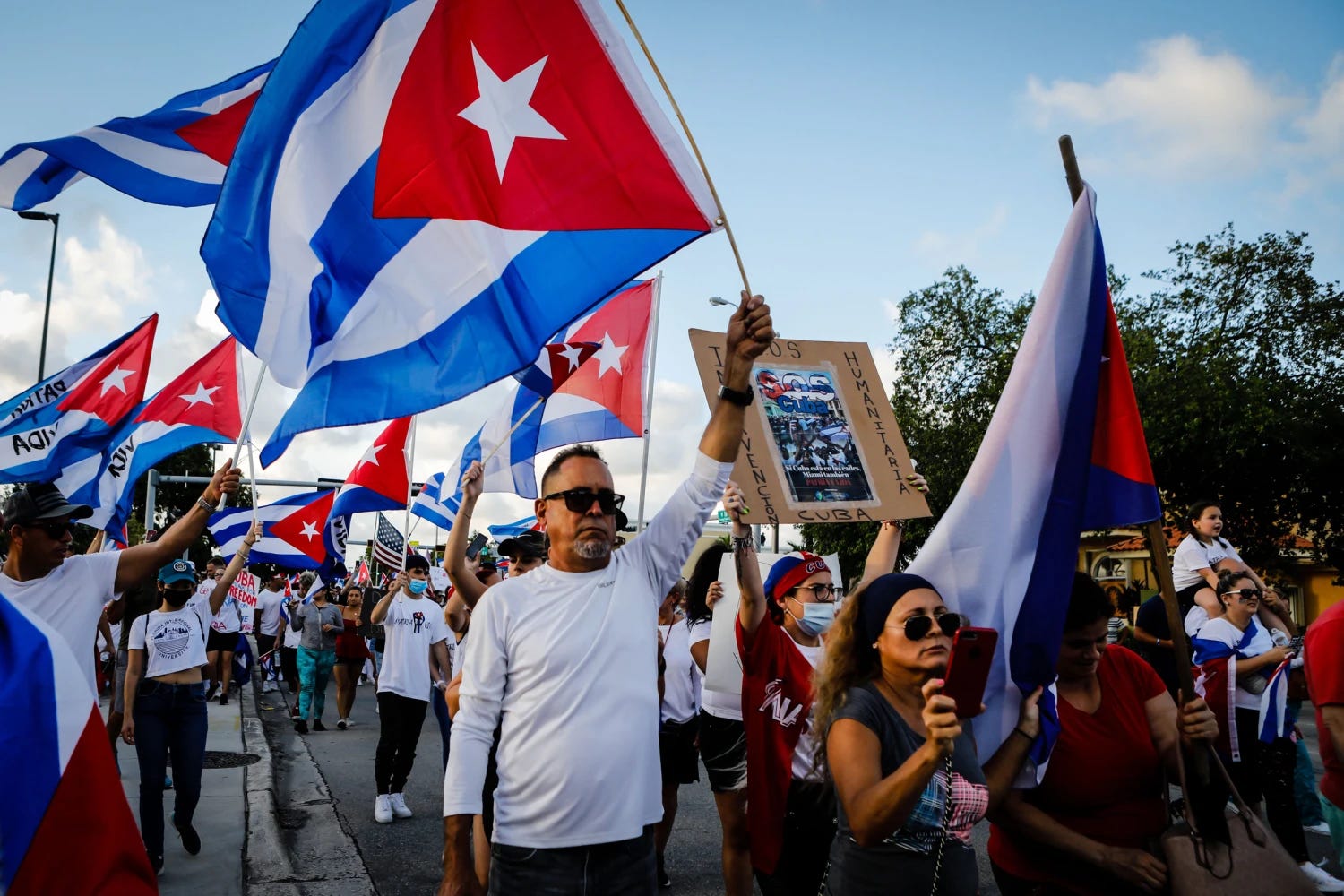
Summary:
The State Department on July 20 released a 100-page report titled “Cuba: The Capital of 21st Century Communism,” charging that Havana has run a fused campaign of espionage, propaganda and support for armed movements against the United States for nearly 70 years.
The document rests its case on convicted moles Víctor Manuel Rocha, Ana Belén Montes and Walter Kendall Myers, who together penetrated the National Security Council, the Pentagon and the State Department.
It asserts Cuba’s ideological reach extends from the Weather Underground era to present-day movements, and warns of 18 signals-intelligence facilities on the island, several run by China and Russia.
The report lands amid an escalating pressure campaign: new sanctions on Cuban front organizations, investigations of 145 U.S. groups for foreign-agent violations, and a lawsuit to strip Rocha’s citizenship.
Havana calls the campaign evidence of a "criminal and genocidal intent" toward the island, and defenders of the U.S. groups under investigation describe the sweep as a threat to protected advocacy.
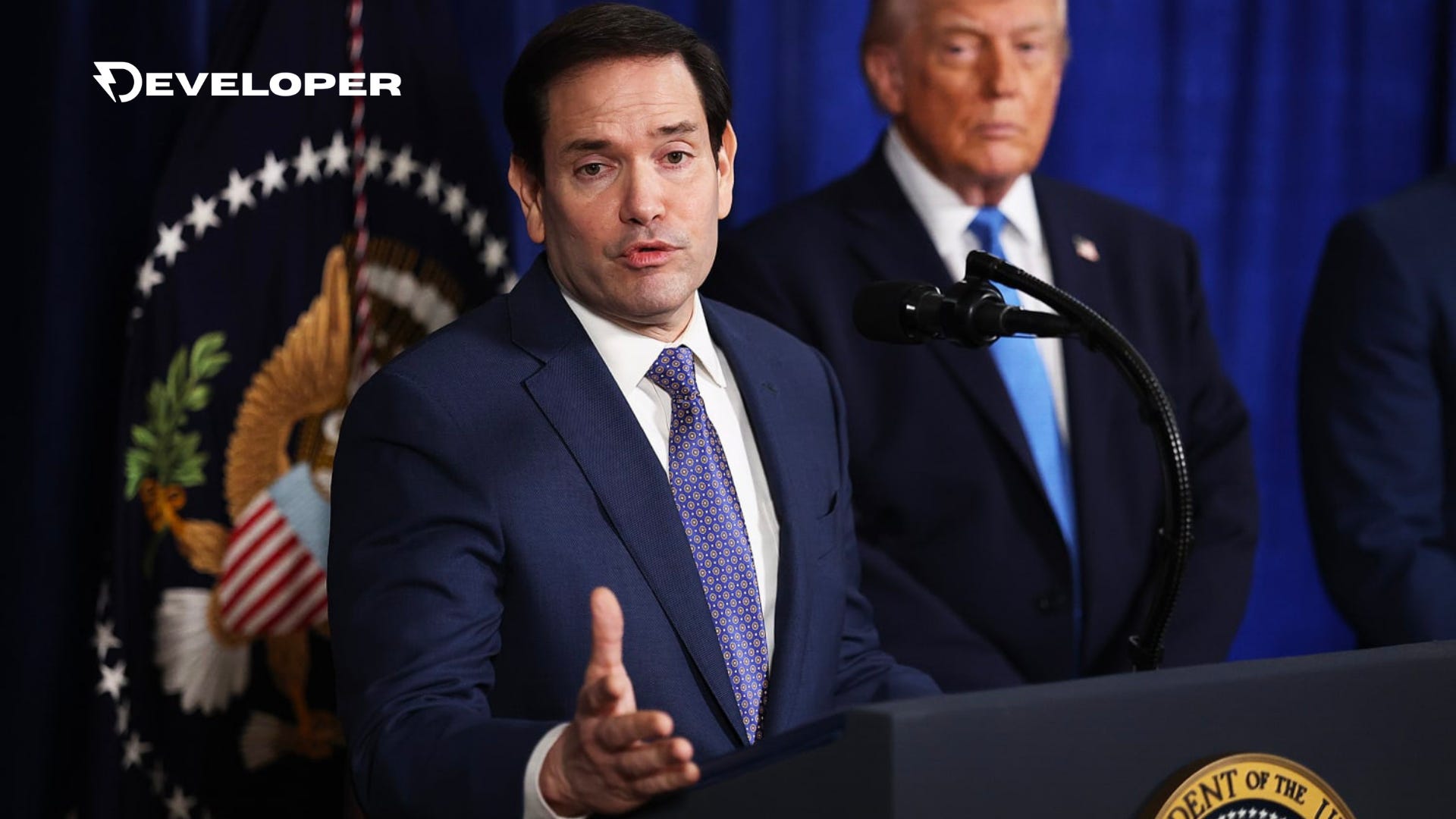
THE STATE DEPARTMENT on Monday released a 100-page report accusing Cuba of waging a nearly 70-year campaign of espionage, infiltration and ideological warfare against the United States—a sweeping public indictment of Havana’s intelligence apparatus. The document, titled “Cuba: The Capital of 21st Century Communism,” was announced by the department and championed by Secretary of State Marco Rubio, who wrote that “for more than six decades, the Cuban regime has been the leading sponsor of radical leftism and Third Worldism in the United States” and that “the American people deserve to know.”

The report’s central claim is one of method: Havana, it argues, fused espionage, propaganda, political influence and support for armed movements into a single revolutionary project aimed at the United States. That framing turns a catalog of Cold War spy cases, militant movements and modern sanctions into one continuous story, and it supplies the legal and political rationale for the Trump administration’s intensifying squeeze on the island.
The Spies at the Center of the Case
The report’s factual spine runs through three of the most damaging espionage cases in modern American history. Víctor Manuel Rocha, recruited in Chile in 1973, rose to Director of Inter-American Affairs on the National Security Council and U.S. ambassador to Bolivia while secretly serving Havana for roughly half a century; he was arrested in December 2023 and sentenced to 15 years in April 2024, in what then-Attorney General Merrick Garland called one of the deepest and longest-lasting penetrations of the U.S. government by a foreign agent. The Justice Department this year sued to revoke his citizenship.
Ana Belén Montes, recruited as a Johns Hopkins graduate student in 1984, became the Defense Intelligence Agency’s senior Cuba analyst while passing Havana the identities of at least four undercover officers and, the report says, the location of a secret U.S. military base in El Salvador; arrested days after the Sept. 11 attacks, she was released in January 2023. Walter Kendall Myers, a State Department intelligence official, spied alongside his wife Gwendolyn for nearly 30 years, met Fidel Castro in 1995 and received a life sentence in 2010; he died in prison this past March at 88.
The document also revisits the Wasp Network, the South Florida spy ring dismantled in 1998, whose leader Gerardo Hernández helped coordinate the February 1996 shootdown of two civilian exile aircraft over international waters that killed four people. Hernández was freed in December 2014 during the Obama-era diplomatic thaw. Former counterintelligence officials quoted in the report contend the exposed cases are the tip of the iceberg, with dozens of unidentified Cuban operatives estimated to remain on U.S. soil.
The Ideological Pipeline
The second half of the department’s argument is ideological. The report traces Havana’s influence to the 1966 Tricontinental Conference, which drew more than 500 delegates from 82 countries to the Cuban capital and, in the department’s telling, forged a strain of Marxism organized around racial and social grievance, distinct from Soviet-style class struggle. It cites the Venceremos Brigade—which has brought some 10,000 American activists to Cuba since 1969 and which a 1975 Senate report labeled a dangerous infiltration operation—as a standing recruitment channel.
From there the report draws a straight line through the violence of the radical 1970s, tying Havana to the Black Panthers, the Weather Underground and the Puerto Rican FALN, and citing roughly 2,500 bombings recorded on U.S. soil in 1971 and 1972. It extends that lineage to the present, asserting Cuban ideological fingerprints on Antifa, anti-ICE networks and organizations linked to Black Lives Matter, as well as pro-Palestinian campus activism.
The Developer's independent review of the document finds that these contemporary linkages rest largely on Cold War-era episodes and interpretive framing, with no newly disclosed intelligence establishing Cuban direction of the movements it names—the report's most consequential and most contested leap.
Listening Posts 90 Miles From Florida
The report's forward-looking alarm is technical. It describes 18 signals-intelligence facilities operating on the island—three run by China and two by Russia—positioned to intercept U.S. military communications across the southeastern United States, and says intelligence personnel from both countries have tripled since 2023. It further flags Cuban nationals fighting for Russia in Ukraine since 2023, and a “National Rapid Response Plan” distributed in June by the National Network on Cuba—a U.S. group the report places inside Havana's network—outlining coordinated action against federal buildings, military bases and ICE facilities within 24 hours of any American military move against the island.
The Policy Squeeze Already Underway
The report codifies a pressure campaign that has been building all year. In June, the administration sanctioned the Cuban Institute of Friendship with the Peoples (ICAP) and the travel agency Amistur under a new executive order targeting subversive anti-American activities; the report, citing former Cuban intelligence officers, says roughly 90 percent of ICAP's staff is affiliated with the Cuban spy agency, a charge the institute flatly denies. July brought a further round of sanctions aimed at tourism and paramilitary structures, a former ICAP official detained pending deportation, and federal scrutiny of 145 pro-Cuba organizations for potential Foreign Agents Registration Act violations.
The Pushback
Havana’s answer to the pressure campaign has been categorical. Foreign Minister Bruno Rodríguez called the July designations evidence of a “criminal and genocidal intent” toward the Cuban population, describing the measures as a war on the island’s living conditions and sources of livelihood. Cuba’s embassy in Washington maintains its diplomats strictly comply with the Vienna Convention, and ICAP rejects the espionage characterization outright.
The American organizations under federal scrutiny—CodePink, the National Network on Cuba and the People’s Forum among them—deny acting at Havana’s direction, and their defenders describe the sweep as a new McCarthyism aimed at constitutionally protected advocacy; legal observers note the Treasury Department can impose civil penalties under a strict-liability standard requiring no proof of intent. The investigations have produced no publicly announced charges to date, and the report discloses no newly declassified files establishing Cuban direction of the contemporary movements it names.
Why It Matters
The stakes reach well beyond Havana. By defining Cuban influence to include domestic American protest movements, the report converts a foreign-intelligence question into a domestic-enforcement agenda—the FARA investigations, deportations and denaturalization suits now underway will test where counterintelligence ends and constitutionally protected activism begins. The document’s SIGINT findings sharpen a second front: Cuba as forward operating territory for China and Russia inside America’s defensive perimeter, a framing that places the island in the same adversary bloc as Moscow, Beijing and Tehran. For Cuba—five years after the July 11, 2021 protests and deep in economic crisis—the report signals that Washington’s strategy is documented pressure, applied in public, with the full weight of a historical record the department has now converted into argument.
The question hanging over the document is what it is building toward. It arrives six months after U.S. forces captured Nicolás Maduro in Venezuela—an operation American allies and adversaries alike read as precedent for further intervention—and amid open speculation that Cuba is next on the administration's list. Rubio has said Washington's preference is a negotiated diplomatic settlement, paired with the assertion that a threat to national security gives the president “a right and an obligation to address that threat.”
Analysts tracking the buildup cite an oil squeeze, Caribbean naval deployments and the indictment of Raúl Castro as layered pressure designed to force the regime's capitulation or supply the predicate for intervention; Havana dismisses the accompanying threat allegations as fabricated. Read against that backdrop, the report is the public evidentiary file a government assembles when it intends to keep every option open—up to and including force.
A Quick Ask: Because Independent Journalism Does Not Fund Itself.
Press freedom does not survive on vibes. It survives because readers decide the work is worth protecting. The Developer is independent, ad-free, and reader-funded—which means your support goes directly into the reporting, not into some billionaire’s pocket, corporate boardroom, or cowardly institution waiting for permission to fold. If my work helps you stay informed, consider upgrading to paid: $8/month or $80/year. If upgrading isn’t possible right now, sharing The Developer with someone who needs to read it matters just as much. Help keep independent journalism alive, loud, and impossible to buy.


Maybe they should talk more about our own government's manipulation of Cuba and the CIA's (among others) nefarious machinations over the same time period. How about we talk about how Meyer Lansky's network holds a grudge and all of the criminal mafia-types with the same long memory who are deeply embedded in American politics to this day?
Follow Cuban American journalist Arturo Dominguez on Substack for an unfiltered view of how badly America has treated/is treating Cuban citizens and how badly little Marco wants a war.