

EXPLAINER: Trump’s Illegal Tariffs Just Collapsed. Now the $175 Billion Question: Who Gets Paid Back?
The Supreme Court nuked Trump’s emergency tariff scheme. Now the fight is over who gets up to $175 billion in refunds—and why ordinary Americans probably won’t see a dime.

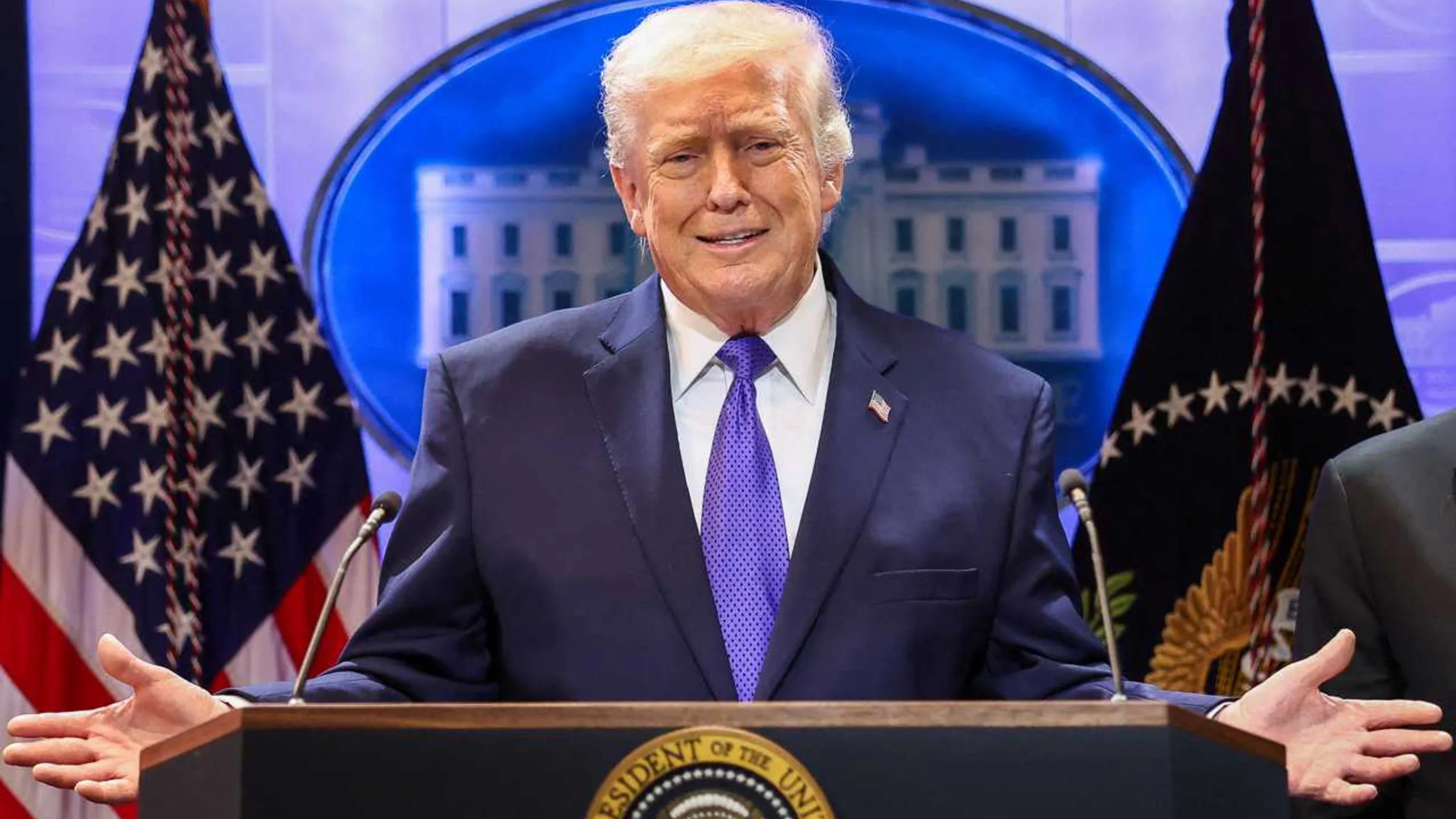
THE SUPREME COURT has just blown a hole in Donald Trump’s favorite economic stunt. In a 6–3 ruling, the justices held that the International Emergency Economic Powers Act (IEEPA)—a 1977 law meant for genuine national emergencies—does not give the president the power to unilaterally slap tariffs on most of the planet. Conservative stalwarts Clarence Thomas, Samuel Alito, and Brett Kavanaugh dissented. The majority said, in essence, that tariffs are taxes, and the Constitution gives that “birth-right power to tax” to Congress, not to a president with a marker and a grievance.
Trump took the loss like he usually takes losses: by insisting he actually won. At an impromptu press conference, he called the decision “deeply disappointing” and said he was “ashamed” of the justices who ruled against him, branding them “fools and lap dogs” and accusing them—without evidence—of being influenced by “foreign interests.” He reserved his praise for the three conservative dissenters, singled out Brett Kavanaugh’s opinion as heroic, and then turned his fire on his own appointees, Neil Gorsuch and Amy Coney Barrett, calling their votes “an embarrassment to their families.”
He also announced his workaround. Trump said he will immediately impose a new 10% global tariff using Section 122 of the 1974 Trade Act, a dusty provision that lets a president raise tariffs for up to 150 days before needing Congress to extend them. He stressed that separate national-security tariffs and duties tied to “unreasonable” trade practices would remain in place, meaning the overall trade war architecture stays intact even as its legal foundation shifts. Section 122 has guardrails—a 15% cap and a built-in expiration date—but Trump clearly views it as fresh runway to keep the tariffs rolling while lawyers and lobbyists regroup.
The ruling did not say what happens to the money already collected under the now-illegal IEEPA tariffs, and that’s where the real fight begins. Trump bragged that the government had taken in “hundreds of billions of dollars” and then complained that the court gave him no instructions: “What happens to all the money that we took in? It wasn’t discussed,” he told reporters, predicting the question will “get litigated for the next two years.” He clearly wants to keep the cash; the decision clearly says he never had the authority to collect it in the first place. The gap between those two realities is where the constitutional migraine lives.
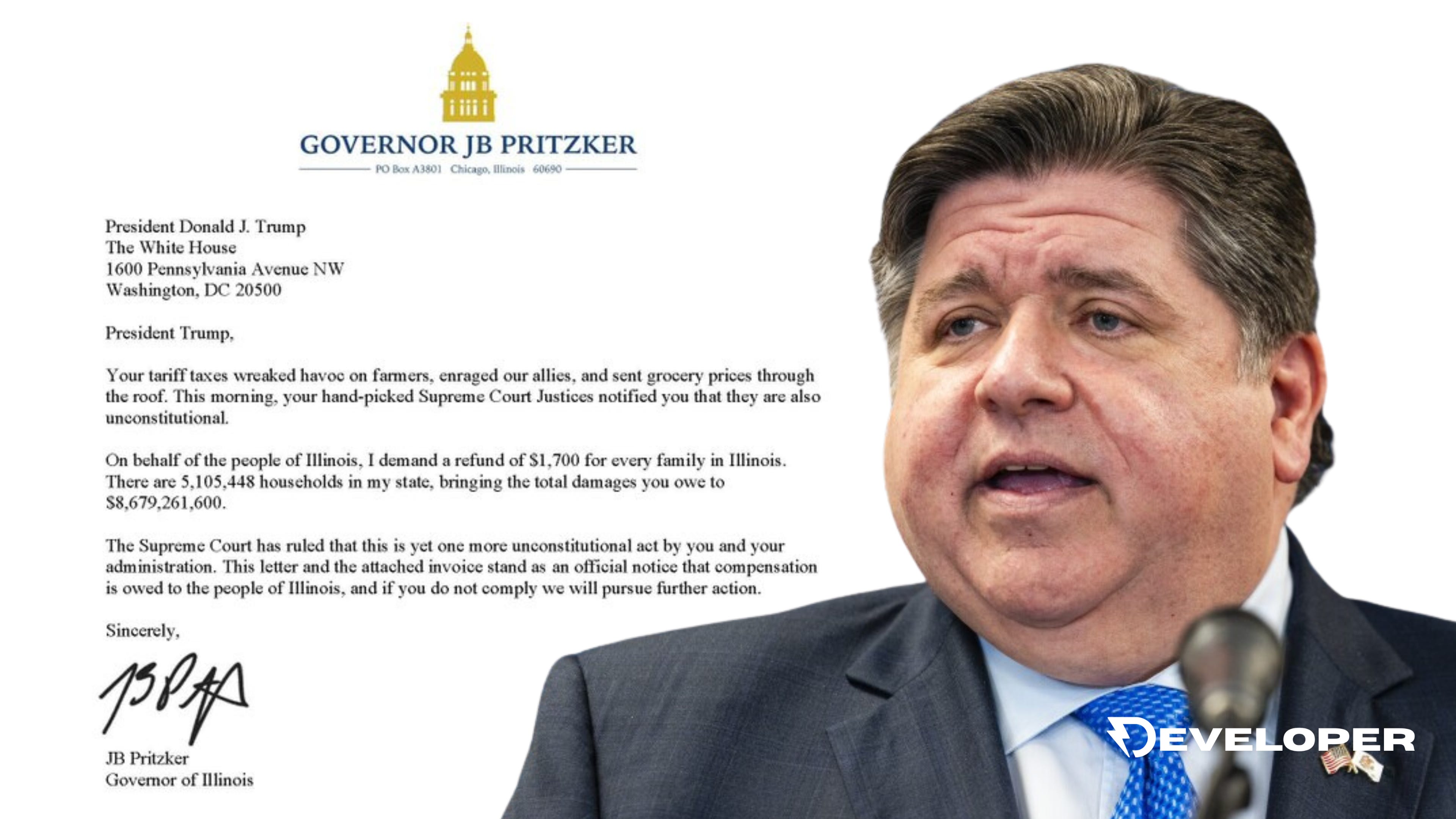
Others are already sending the bill. Illinois governor JB Pritzker fired off a letter to Trump demanding “a refund of $1,700 for every family in Illinois,” roughly $8.7 billion, complete with a mocked-up invoice branding Trump’s account “Past Due – Delinquent.” Pritzker’s letter put a number on the damage and a target on Trump’s desk: if the tariffs were unlawful from day one, states whose residents paid higher prices are lining up to say so—and they want their fucking money back.
On the economics side, Paul Krugman made the same point with fewer graphics and more rage control. In a post on his Substack, he noted that the ruling was “scathing” and described Trump’s IEEPA tariffs as a naked usurpation of Congress’s taxing authority, quoting the court’s skepticism that Congress secretly buried a tax power in a law designed for emergency sanctions. Krugman also flagged Trump’s Section 122 pivot and then drove the knife in: if you “seized money without constitutional authority,” finding a different statute for next time doesn’t magically legalize the money you already grabbed. The backdoor workaround for tomorrow doesn’t launder yesterday’s illegality.
The scale of the potential refund problem is enormous. An analysis by the Penn Wharton Budget Model estimates that reversing the IEEPA tariffs could generate up to $175 billion in refunds on duties the government has already collected. The supreme court did not order those refunds automatically, but by ruling that the tariffs were unlawful, it opened the door to an avalanche of claims. If even a fraction of that $175 billion has to be paid back, Trump’s supposed triumph of “tariff revenue” becomes a very expensive round trip.
So how would anyone actually get the money? Under customs law, when goods come into the United States, U.S. Customs and Border Protection (CBP) initially treats the duty bill as provisional. After inspection and paperwork, each shipment eventually “liquidates”—CBP finalizes the duty amount, typically several months later. From that date, importers generally have 180 days to file a formal protest and argue that the duties were wrongly assessed, including because the underlying tariffs were unconstitutional. That timeline is laid out in a Congressional Research Service brief and in CBP’s own guidance on protests.
In practice, this means the people with a realistic shot at refunds are importing firms, not the shoppers who paid higher prices at the register. Law firms have spent months urging big importers to quietly file protective protests to preserve their rights if the court knocked out the tariffs; those companies can now march into CBP and, if needed, the Court of International Trade, waving the supreme court ruling like a receipt. Consumers, by contrast, don’t have a direct line to CBP. Their “refund” came as inflated prices on everything from appliances to furniture, and there is no mechanism that turns a successful importer protest into a lower credit card bill six months after the fact.
Trump’s own treasury secretary, Scott Bessent, basically admitted that. Asked at the Economic Club of Dallas about the looming “food fight” over the roughly $175 billion in tariff revenue, Bessent replied: “I got a feeling the American people won’t see it.” He’s on tape saying it, fingertips pressed together like a cartoon villain. Trade lawyers and economists largely agree: the refunds, if and when they come, will go to the entities that wrote the checks to CBP. The American public’s role was to fund the experiment by paying more for imported goods.
Politically, the response has followed the usual trench lines. Democrats hailed the decision as a badly-needed reminder that Congress controls the tax code and that “national emergency” isn’t a magic phrase you can staple to every policy whim. Many Republicans said they “respect” the ruling while promising to work with the administration to keep some version of the tariffs alive through new legislation or by leaning on Section 122 and other trade tools.
What happens next is a long, dull war fought by people in suits with very expensive billable hours. Importers that preserved their rights will file protests and lawsuits; others will scramble to see whether their shipments are still within the 180-day window. The Court of International Trade will become a key battlefield over how far back refunds can reach and whether the government can slow-walk or narrow them. Meanwhile, Trump will try to rebuild his tariff regime under other laws, even as this decision hangs over any future attempt to improvise an “emergency” tax from the Oval Office. The immediate effect is a victory for constitutional order. The longer-term story is whether the rule of law can pry $175 billion out of a government that collected it on a legal theory the supreme court just demolished.
Why this work matters
This kind of reporting and explanation comes from a one-man, subscriber-funded newsroom with no corporate sponsor to flatter and no party line to obey. If you want more of it, you can support The Developer for $8/month or $80/year as a paid subscriber—and if upgrading isn’t in the cards, sharing The Developer with friends, family, and co-workers is just as powerful.


Congress should make a law that the $175 billion should pay for healthcare of all Americans. See how easy that was??
I agree with you MICHELLE!
Trump should be ordered to PAY THIS $ back personally! Not by using his slush fund of the American people! He’s raped U.S. an made millions/billions? himself off of all his illegal actions as president.
CONGRESS?