


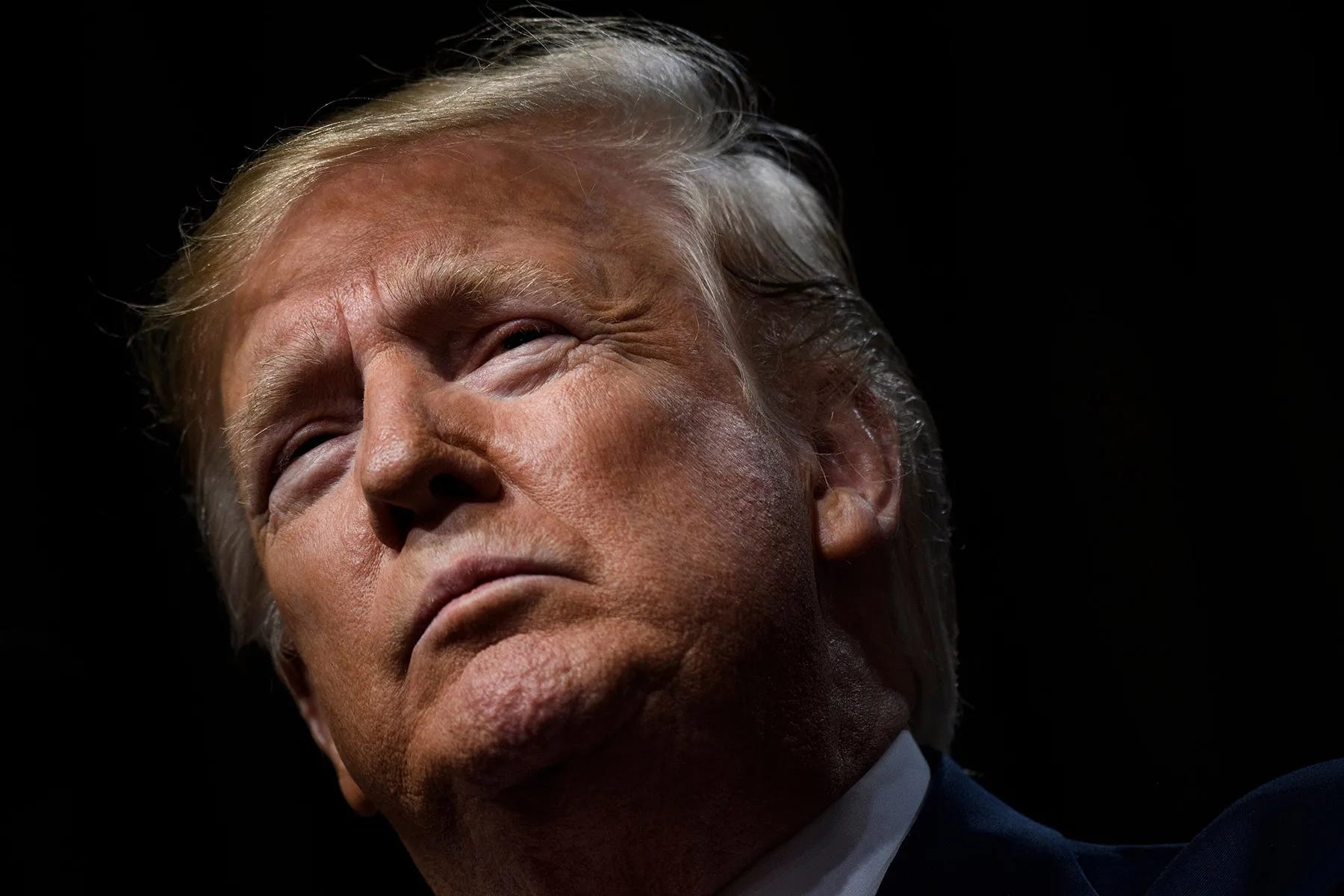
DONALD TRUMP signed two executive orders Thursday that withhold automatic citizenship from four categories of children born on American soil and order the government to shut down the commercial birth-tourism trade.
The first, "Continuing to Protect the Meaning and Value of American Citizenship," bars every federal agency from issuing documents that recognize those children as citizens, and from honoring state or local documents that do. The second, "Ending Birth Tourism," hands the secretary of state and the secretary of homeland security the tools to deny visas, revoke them, and move against the businesses that arrange the trips.
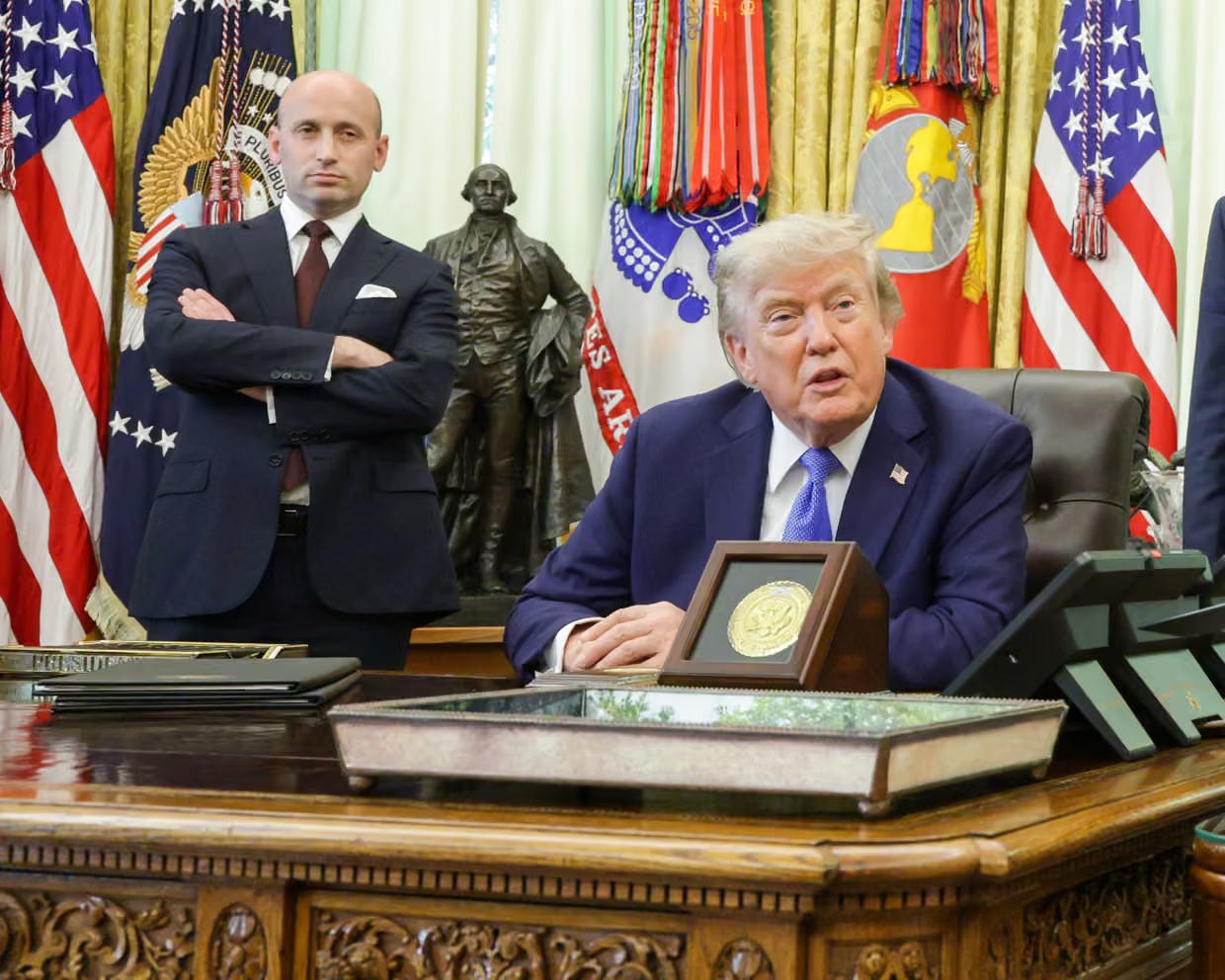
“We had a very unfortunate decision in the Supreme Court concerning birthright,” Trump said in the Oval Office. “It was close, but a very, very unfortunate decision. So we’re making adjustments because it’s very unfair.”
“They’re building businesses around birthright citizenship,” he added. “They’re buying their way in, and we’re not going to let it happen.”
Why It Matters
The 14th Amendment guarantees citizenship to nearly everyone born on American soil. These orders mark Trump’s second attempt of his term to shrink that guarantee, and they land five weeks after the Supreme Court rejected the first one. A court challenge is close to certain.
What the Supreme Court Decided
On June 30 the justices struck down the executive order Trump signed on Inauguration Day, which sought to deny automatic citizenship to a child whose mother was unlawfully present, or lawfully but temporarily present, when the father was neither a citizen nor a lawful permanent resident.
Chief Justice John Roberts, writing for a 6-3 majority in Trump v. Barbara, held that children born in the United States to parents who are unlawfully or temporarily present satisfy both requirements of the Citizenship Clause. “Under the Constitution, they are citizens at birth,” the opinion said.
The Legal Theory
The new order builds on a single phrase from the decision that beat him. It quotes the court’s holding that the Citizenship Clause covers children born to parents “for whom no extraterritorial fiction applie[s],” then sets out to identify children it says fall outside that rule.
That reading leans on the narrow exceptions the court has long recognized, which cover circumstances in which American law does not fully govern the ground a child is born on: the families of accredited diplomats, foreign public ships, territory under hostile occupation, and tribal lands. The order describes its own list as non-exhaustive.
Who the First Order Reaches
Everything runs through one gate. The order applies to a child only when “neither parent of that person is a citizen,” and then only when one of four conditions holds.
The January order it replaces applied “only to persons who are born within the United States after 30 days from the date of this order.” Thursday’s order carries no comparable cutoff, and it directs agencies to stop honoring citizenship documents that state and local authorities have already issued. Officials described the orders as reaching only future births.
A parent who is an alien enemy. The order defines the term as a member of a designated foreign terrorist organization or a Specially Designated Global Terrorist.
A parent who works for a foreign government. The order lists ambassadors, embassy and consulate staff who are nationals of that country, anyone employed by a foreign government in an official capacity, and employees of international organizations who hold immunity. The 14th Amendment has always withheld automatic citizenship from ambassadors’ children. This carries that treatment down the payroll.
Deputy chief of staff Stephen Miller said the order reaches “large categories of people who lobby and act on behalf of foreign governments.” None of the four subcategories in the text names a lobbyist or a registered foreign agent.
A parent who bought access to citizenship. The order reaches a parent who “engaged in a commercial transaction to purchase or access birthright citizenship for the person, or engaged in fraudulent activity to obtain citizenship.” It names two forms: paying to put the mother in the United States or a territory to give birth, and contracting with a surrogate already there.
Birth in a territory where Congress has not granted citizenship. Citizenship in the territories rests on statute rather than the Constitution. Congress conferred it on Puerto Rico, Guam, the U.S. Virgin Islands and the Northern Mariana Islands, and people born in American Samoa and Swains Island are nationals rather than citizens. The order withholds federal recognition wherever no statute applies, which leaves the provision loaded should Congress repeal one. Rep. Morgan Griffith, R-Va., introduced a bill last month that would end automatic citizenship across the territories beginning Jan. 1, 2027, limiting it to newborns with at least one parent who is a citizen or permanent resident. It is not expected to pass.
Every federal agency has 30 days to publish guidance on how it will apply the order. A severability clause preserves the rest if a court voids any piece, and the order creates no right anyone can enforce against the government in court.
What the Second Order Directs
“Ending Birth Tourism” defines the practice as “the entry of any foreign national into the United States via a nonimmigrant visa for the purpose of giving birth on American soil,” and covers any effort by a foreign national to facilitate such an entry.
It invokes Section 215(a) of the Immigration and Nationality Act, the president’s authority over the terms on which noncitizens enter and leave the country, and directs the two secretaries to update rules and guidance as needed. The listed tools run from denying visas and refusing entry to revoking visas already issued, permanently barring any foreign national who enters or tries to enter for that purpose, and acting against the entities that facilitate the trade. The order sets no deadline.
Citizenship is “not a commodity to be acquired through calculated exploitation and evasion of the immigration laws,” the order says, and operators “use deceptive advertisements and inducements to entice foreign nationals to travel to the United States.” Participants in the schemes abuse the temporary visa categories, it goes on, “to establish a permanent foothold in the United States by securing the advantage of citizenship for their children and then potentially for themselves.”
Officials did not say how consular or border officers would establish that a traveler intends to give birth here, or how far into a pregnancy a woman could still be admitted on a tourist visa.
The Fraud Argument
Washington can already revoke the citizenship of people naturalized by fraud, and the administration extends that principle to a parent who buys a child’s way into citizenship. Stephen Miller called birth tourism “by definition, a fraud on the American system.”
Federal prosecutors have built that record. A 2019 indictment charged 19 people over Southern California operations running “maternity houses” that coached clients to tell consular officers they would stay two weeks, to wear loose clothing through customs to hide their pregnancies, and to fly through Honolulu rather than Los Angeles. Fees ran $40,000 to $80,000, and up to $100,000 for VIP customers.
What the Law Already Does
Federal regulation bars a visitor visa issued “for the primary purpose of obtaining U.S. citizenship for a child by giving birth in the United States,” and presumes that intent for any applicant a consular officer has reason to believe will give birth during her stay. Immigration officers can separately turn a pregnant foreign national away at the border on the same finding.
Amanda Frost, a University of Virginia immigration law professor, has argued the existing tools are sufficient. “If birth tourism is a problem, the answer is to enforce that regulation,” she said.
Congress Is Already Digging
The House Oversight Committee opened an investigation into birth-tourism centers and in May demanded marketing materials, service packages, client agreements, visa-coaching documents and fee data from the operator behind “Have My Baby in Miami.”
“The benefits of U.S. citizenship are a unique privilege,” the committee wrote. “However, as foreign expectant mothers traveling for this purpose come predominantly from China and Russia, there are concerns that the birth tourism industry is giving rise to potential national security and election integrity threats posed by adversarial nations that challenge U.S. interests.”
A Senate Homeland Security and Governmental Affairs Committee report documented the trade in detail, cataloging maternity packages that ran from $6,900 to $49,000 and hospital bills that states absorbed when clients left them unpaid.
By the Numbers
Trump told reporters Thursday that birth tourism accounts for hundreds of thousands of births a year. His own officials called the practice “relatively uncommon.”
The scale is contested, and the highest figures in circulation are the shakiest. The most expansive census-based estimate “puts birth tourism at 22,000 to 26,000 babies born annually on U.S. soil, although government data show just 9,600 births to mothers with foreign addresses in 2024.” Set against more than 3.5 million births a year in the United States, the larger number amounts to less than 1%.
Analysts who rechecked the arithmetic behind that upper estimate found roughly 10,000 mothers counted twice. Correcting the error and screening out citizens and long-term residents leaves about 1,200 to 1,400 births a year, a total the reviewers described as not statistically different from zero.
What Trump Has Said
Trump has made birth tourism the centerpiece of a broader push against birthright citizenship that has so far failed in court.
“Birthright citizenship is not about rich people from China, and the rest of the World, who want their children, and hundreds of thousands more, FOR PAY, to ridiculously become citizens of the United States of America,” he wrote March 30 on Truth Social.
His critics answered at the time that he should confine himself to the narrow problem he had just described, which federal law already prohibits.
What’s at Stake
The orders leave birthright citizenship intact for the overwhelming majority of American births. They contest it in four places.
The alien-enemy and foreign-employee categories carry exceptions the courts built for accredited diplomats and hostile occupation over to terrorist designations and foreign payrolls. The commercial-transaction category asks federal courts to accept that what a parent paid for can decide whether a child is born a citizen. The territorial provision withholds recognition now in American Samoa and Swains Island, where no statute confers citizenship, and would arm itself in Puerto Rico, Guam, the U.S. Virgin Islands or the Northern Mariana Islands the day Congress repealed one.
Two gaps in the text will reach a courtroom before any of that is settled: whether the citizenship order reaches people already born, and how an officer is meant to establish that a traveler intends to give birth here. Agencies have 30 days to explain how they will apply the first order. The second carries no deadline.
The same court that rejected his first order five weeks ago will decide what survives of these two.

A Quick Ask: Because Independent Journalism Does Not Fund Itself.
Press freedom does not survive on vibes. It survives because readers decide the work is worth protecting. The Developer is independent, ad-free, and reader-funded—which means your support goes directly into the reporting, not into some billionaire’s pocket. If my work helps you stay informed, consider upgrading to paid: $8/month or $80/year. If upgrading isn’t possible right now, sharing The Developer with someone who needs to read it matters just as much. Help keep independent journalism alive and impossible to buy.


Someone better tell the russian hores living in his properties that the party is over. They’ve been doing it for decades now. I guess that as long as they’re paying him rent, he doesn’t care about them.
Do I need a lawyer now to determine if my newborn is a US citizen?!?!