

EXPLAINER: Key Takeaways From the Supreme Court’s Birthright Citizenship Ruling—and the Bloodline Theory It Buried
The justices left birthright citizenship intact, rejected Trump’s executive order, and exposed a deeper fight over whether American citizenship belongs to soil, law, or lineage.

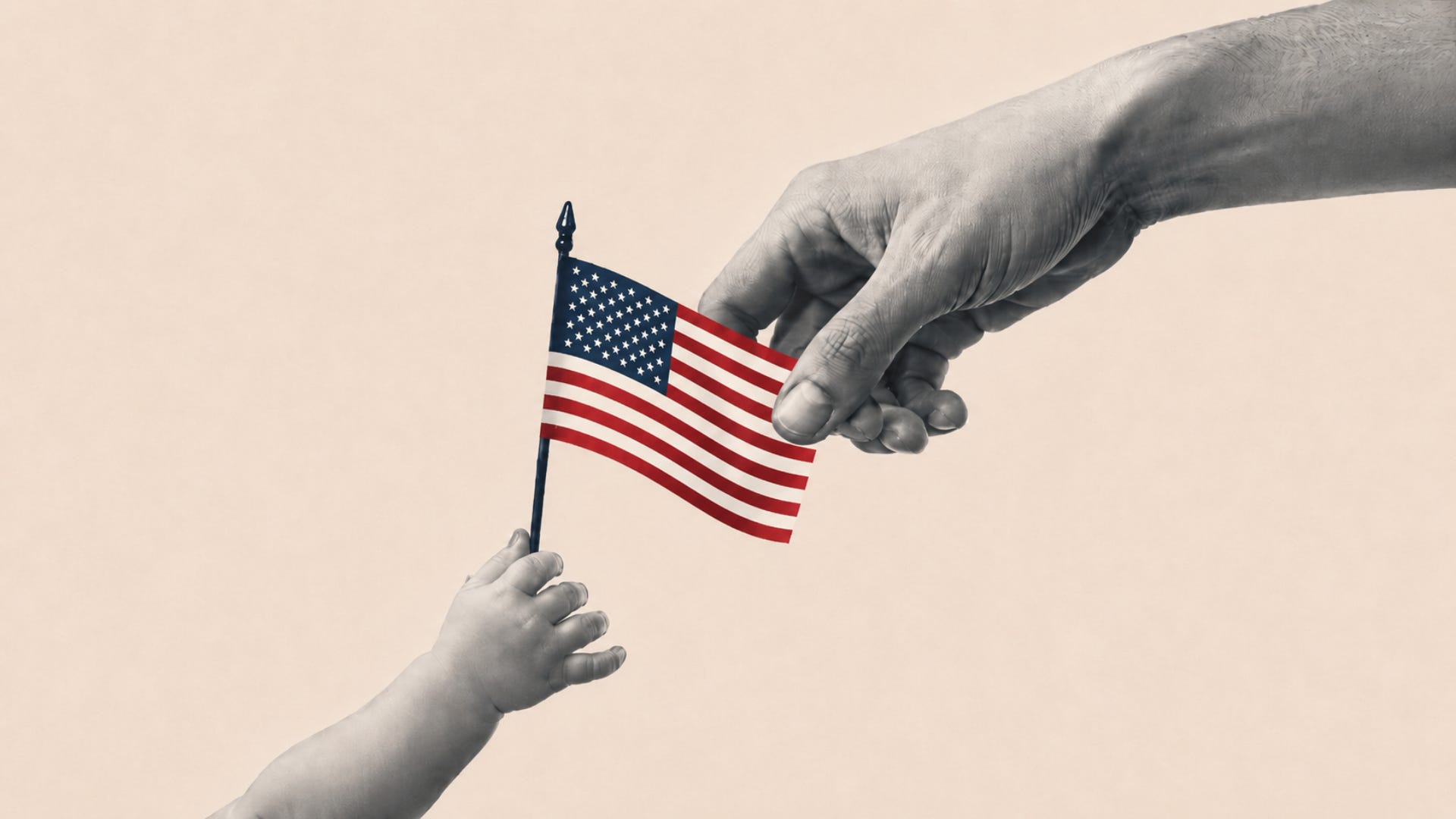
BIRTHRIGHT CITIZENSHIP, affirmed today by the U.S. Supreme Court, is deeply woven into American life. Despite Donald Trump’s effort to dismantle it by executive order, birthright citizens serve at the highest levels of his own administration, including secretary of state Marco Rubio and FBI director Kash Patel. Americans guaranteed citizenship under the Fourteenth Amendment’s birthright clause have won Oscars, Nobel prizes, and Olympic medals, and may yet deliver the men’s World Cup trophy the United States has spent generations chasing.
Supreme court rulings often reveal more than a legal outcome. They expose the court’s ideological instincts, its constitutional commitments, and the version of the country it is prepared to bless. In recent years, the six-conservative, three-liberal court has issued decisions that have dramatically reshaped the federal government and American life. This ruling did more than block one of the Trump administration’s most aggressive immigration moves. It laid bare a deeper fight over whether the Fourteenth Amendment guarantees citizenship by birth, or whether that promise can be narrowed until bloodline matters more than birthplace.
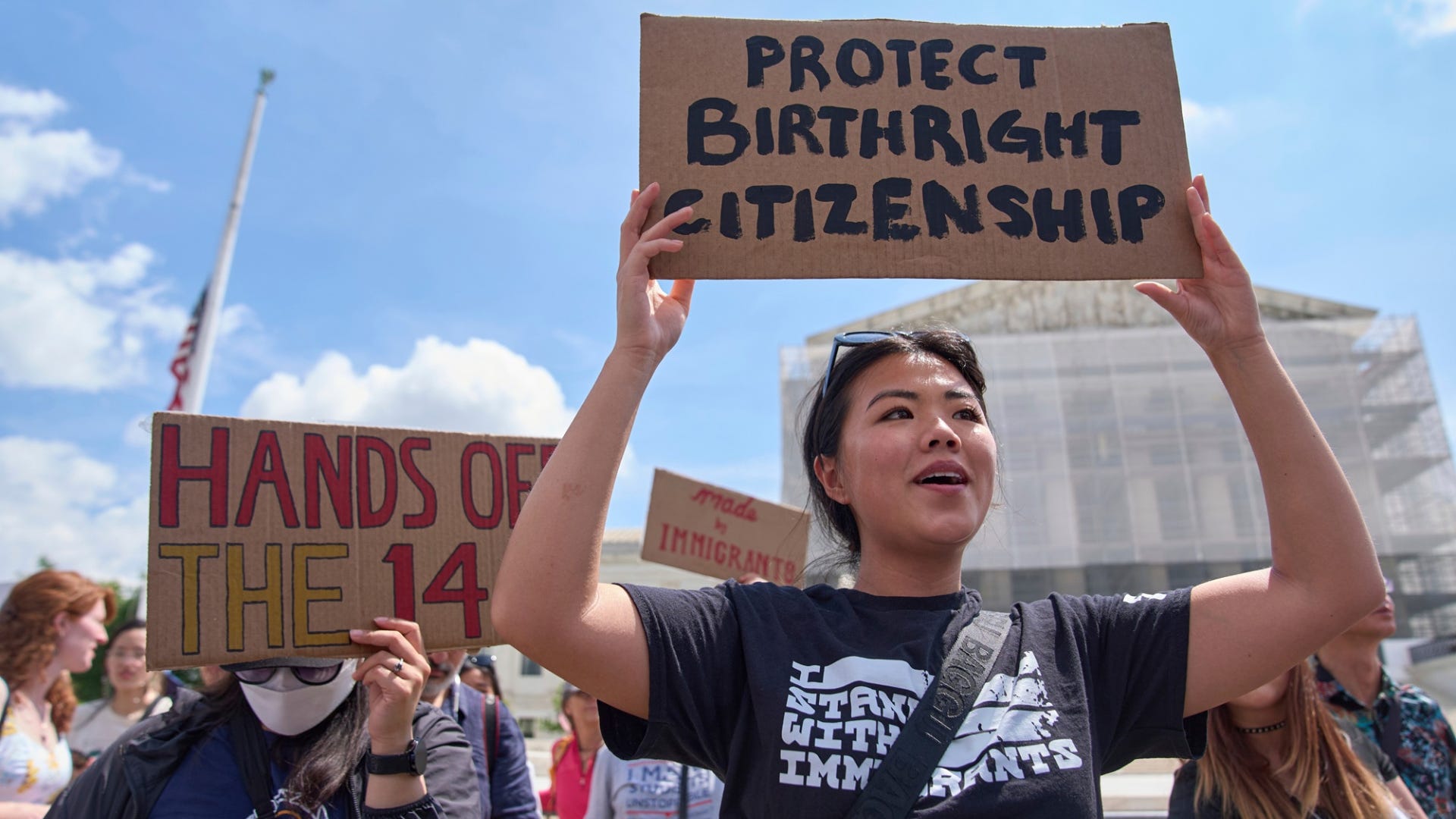
Chief Justice John Roberts wrote the majority opinion, joined by Sonia Sotomayor, Elena Kagan, Ketanji Brown Jackson, and Amy Coney Barrett. Jackson wrote a concurrence, which Sotomayor joined in part. Brett Kavanaugh agreed with the judgment and dissented in part, arguing that the executive order was unlawful under federal law but did not violate the constitution. Clarence Thomas, Samuel Alito, and Neil Gorsuch dissented.
The ruling turned on a foundational question: whether the Fourteenth Amendment protects birthright citizenship as a universal constitutional guarantee, or can be narrowed into a more selective doctrine of belonging. The majority treated birthright citizenship as a constitutional guarantee written to foreclose caste and bloodline hierarchy after Dred Scott. The dissents treated citizenship as something narrower, more conditional, and more available for ideological pruning.
Roberts closed with a line that captured the stakes: “Citizenship, then and now, was the right to have rights—to freely participate in our political community.”
1. Roberts rejected the administration’s revisionist reading of the Fourteenth Amendment.
Roberts rejected the government’s attempt to redefine “allegiance” into a domicile test. “Natural allegiance, they contend, was no longer sufficient for citizenship; some greater quantum of allegiance was required,” he wrote. “How much?” Roberts asked. “The Government offers a smorgasbord of formulations: ‘primary allegiance,’ ‘sufficient allegiance,’ ‘full allegiance,’ ‘requisite allegiance’ ... What all these formulations supposedly share is that they turn on domicile—the place of one’s permanent home.” Then came the line that detonated the premise: “The trouble is that there is scant evidence for this dramatically revisionist view. Certainly no one said that such a change had occurred.” Roberts’s opinion treated the administration’s theory as an invented limit with no serious anchor in the text or the ratification history.
2. Jackson took a blowtorch to Thomas’s history.
Jackson’s concurrence did not nibble around the edges. It confronted Thomas’s reading of the Citizenship Clause head-on. She wrote that “despite his longstanding endorsement of a ‘colorblind’ Constitution, Justice Thomas now surprisingly suggests that the Citizenship Clause was a race-conscious remedial measure.” She added: “It is for this reason, he says, that ‘children who were born in the United States but [to parents] not domiciled here’ are not entitled to claim birthright citizenship.” Jackson’s answer was devastating and direct: “But that narrow vision of the Fourteenth Amendment bears little relationship to the history of its ratification. Even worse, Justice Thomas’s telling elides the entire point of the Second Founding: The Reconstruction Amendments were an anticaste, antisubordination reset for the Nation, not a mere spot treatment for the dark stain of slavery.”
3. Jackson warned that bad history is not academic sloppiness—it is political weaponry.
Jackson reached for Frederick Douglass and the discipline of memory. She noted that Douglass wanted to “show that nations should have memories.” Then she sharpened the warning: “In the time since Douglass’s prescient observation, Americans have come to learn that fading memories are not the only danger. The distortion of historical facts—retellings that reimagine and repurpose past events to lend credence to misbegotten aims—may be an even greater threat.” She continued: “Yet here we are. The Government, the principal dissent, and a handful of revisionist commentators now vigorously promote an interpretation of the Citizenship Clause that diverges sharply not only from what the text says, but also from the historical record as interpreted by the keepers of ‘the call of remembrance’ (trained historians).” Jackson cast the anti-birthright argument as an ideological project built on counterfeit history.
4. Jackson said the real repurposing is coming from the government and the dissent.
Jackson turned Thomas’s own charge back on him. “It is the Government and Justice Thomas who have ‘repurposed the Fourteenth Amendment’,” she wrote. “By ignoring that our Constitution stands firmly against caste and subjugation—on all axes and in all manners—they deny the clear, universalist vision shared and proclaimed by the Fourteenth Amendment’s Framers.” She went further: “Of course, the ultimate irony is that for all the talk about the detestable Dred Scott decision, the Government and the principal dissent propose a return to its core tenet.” Then came the moral center of her concurrence: “Their bottom line is that, for certain people, being born on American soil will not suffice to confer citizenship.” Jackson called that “odious,” said the Fourteenth Amendment should be “the death knell for this kind of claim,” and closed by saying the Court had preserved “the most basic animating principle of our Nation’s founding—that all human beings are created equal—once more.”
5. Thomas said Black Americans were entitled to citizenship because they had “no other homeland.”
Thomas’s dissent framed the Citizenship Clause as a protection for formerly enslaved Black Americans and not a broad guarantee extending to the children of people here unlawfully or temporarily. “Blacks were entitled to citizenship because they were Americans,” Thomas wrote. “They had no other homeland, owed no allegiance to any foreign power, and were subject to no other authority.” He continued: “The Citizenship Clause thus guaranteed them the ‘dignity and glory of American citizenship,’ so as to ensure that they would never be treated as second class under the law.” Then he drew the line he believed the Constitution requires: “The same could not be said for the children of foreign temporary visitors. Foreign temporary visitors were attached to their home country, lacked similar bonds to this country, and would not be called upon in time of war.” The dissent’s logic was unmistakable—citizenship, in this view, turns less on birth under American law than on inherited attachment and national belonging.
6. Thomas made clear he thinks parts of Trump’s order fit the original meaning of the Citizenship Clause.
Thomas did not describe the executive order as constitutionally beyond the pale. He described it as at least partly consistent with the Constitution. “The Court today takes the extraordinary step of holding facially unconstitutional the President’s Order excluding from citizenship the children of foreign temporary visitors and illegal aliens,” he wrote. He added that the Fourteenth Amendment “was designed and understood to secure equal rights for the freed blacks but has instead been repurposed for political projects that the Reconstruction Congress did not support.” Then the sentence that matters for the next round of litigation: “Because many potential applications of the President’s Order are consistent with the original public meaning of the Citizenship Clause, I respectfully dissent.” That is less a dissent than an engraved invitation for future challenges.
7. Thomas said he does not think this ruling will last.
Thomas ended with open contempt for the majority’s view of citizenship. “The Court has repurposed the Fourteenth Amendment to protect its own set of preferred rights that the Reconstruction Congress never contemplated and that cannot find support in its text,” he wrote. “Today, the Court does so again by recognizing a constitutional right to citizenship for the children of all foreign birth tourists and illegal aliens.” Then the forecast: “I am not sure that today’s opinion will stand the test of time.” He added, “Today’s opinion devalues that citizenship.” The message was plain. Thomas sees this decision not as the settlement of a constitutional question, but as a doctrinal error waiting for a future Court to reverse.
8. Alito called the ruling one of the most important in Court history—and a serious mistake.
Alito’s dissent opened with maximal stakes. “This is one of the most important decisions in the history of the Court, and in my judgment, the Court has made a serious mistake,” he wrote. He said the majority had interpreted the Fourteenth Amendment to confer citizenship on “virtually everyone who happens to be born in this country, including the children of ‘birth tourists.’” He insisted that the amendment “confers citizenship on only those children who, at birth, owe allegiance solely to this country.” Alito’s dissent is useful for one reason above all others: it strips away the euphemisms. The anti-birthright argument asks the law to narrow citizenship by excluding people born here whose parentage, in the dissenters’ view, renders them insufficiently American at birth.
9. Kavanaugh said Congress still has room to legislate in this space.
Kavanaugh agreed that Trump’s order cannot stand as written because it conflicts with federal statute, 8 U.S.C. §1401(a). He parted company with the majority on the constitutional question. “Congress could—consistent with the Fourteenth Amendment—amend §1401(a) or otherwise enact new legislation establishing exceptions to birthright citizenship for children born to foreign citizens unlawfully or temporarily in the country,” he wrote. “But Congress has not yet done so.” Kavanaugh’s opinion is a signal flare: the White House cannot rewrite citizenship by executive order, even as Congress may yet try to do it legislatively.
The ruling preserved birthright citizenship, but it also exposed how close one of the Constitution’s clearest guarantees came to being dragged back into a bloodline fight the Fourteenth Amendment was written to end. The majority refused to let citizenship become conditional on parentage or ideological fashion. The dissents made plain that the project is still alive. Birthright citizenship survived today, but so did the campaign to narrow who gets to belong.
A Quick Ask: Because Independent Journalism Does Not Fund Itself.
Press freedom does not survive on vibes. It survives because readers decide the work is worth protecting. The Developer is independent, ad-free, and reader-funded—which means your support goes directly into the reporting, not into some billionaire’s pocket, corporate boardroom, or cowardly institution waiting for permission to fold. If my work helps you stay informed, consider upgrading to paid: $8/month or $80/year. If upgrading isn’t possible right now, sharing The Developer with someone who needs to read it matters just as much. Help keep independent journalism alive, loud, and impossible to buy.


There was no doubt Justice’s Thomas and Alito would decent they seem to hate everything good that America stands for especially if it helps someone else. Two bitter racist old men and I do mean both. Kavanaugh just wants to please DJT and so do the other two but they all appear more of a danger to America. Hate and bigotry the great destroyers of far too much.
Thank u Stephen Miller for muddying the water on a simple constitutional paragraph.
UHG.