


Summary:
Florida’s new House map could endanger as many as four Democratic seats.
Mary Peltola advanced in Alaska, strengthening Democrats’ pursuit of a Senate majority.
Nixon’s left-wing upset makes Florida’s Senate contest a steeper Democratic climb.
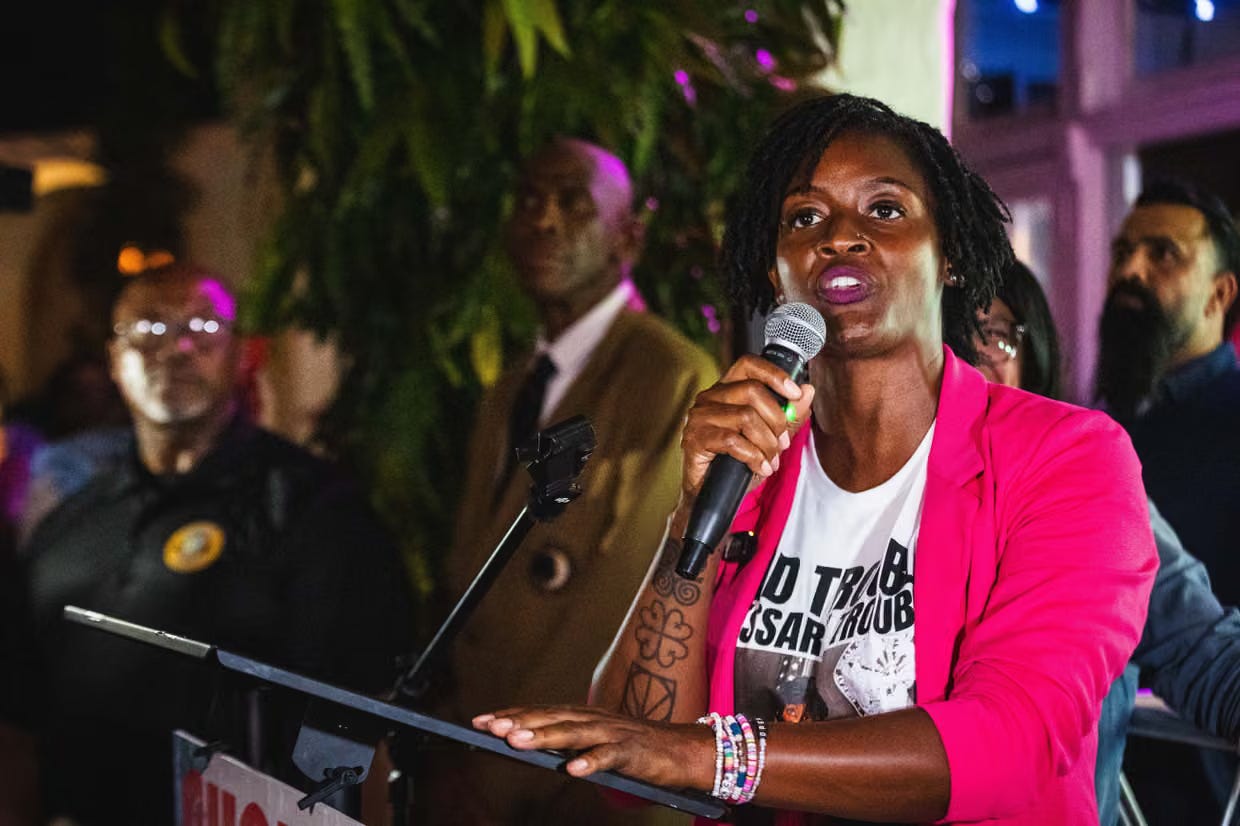
DEMOCRATIC SOCIALIST Angie Nixon captured Florida’s Democratic nomination for the U.S. Senate on Tuesday, defeating former national security official Alex Vindman in a result that upended the party establishment and reduced its chances in an increasingly Republican state.
The victory extended a series of successful progressive challenges in Democratic primaries this year. The movement has attracted voters seeking a more forceful response to Republican President Donald Trump and party leaders they regard as ineffective.
Its general-election consequences will emerge in November, when a broader electorate chooses the lawmakers who will control Congress. Republicans hold 53 seats in the 100-member Senate. Democrats hold 45, and two independents caucus with them. Democrats need a net gain of four seats for a majority.
Florida was already a difficult target. The former presidential battleground has moved markedly to the right since 2016, giving incumbent Republican Sen. Ashley Moody a favorable political landscape.
Vindman entered the primary with a national profile and an overwhelming financial advantage. He raised more than 16 times as much as Nixon, giving him resources that analysts considered important for a statewide campaign against Moody.
Nixon, 42, is a Jacksonville state lawmaker and former union organizer. Her combative opposition to Florida’s congressional redistricting plan became a defining part of her campaign. State lawmakers formally reprimanded her this year after she used a pink megaphone to disrupt a House vote on the new map.
Vindman served on the National Security Council and gained national prominence through his 2019 congressional testimony during Trump’s first impeachment.
Nixon will face Moody in November for the final two years of former Sen. Marco Rubio’s term. Moody was appointed to the seat after Rubio became Trump’s secretary of state.
Two Dan Sullivans Complicate Alaska’s Senate Contest
Democrat Mary Peltola and Republican Sen. Dan S. Sullivan advanced from Alaska’s nonpartisan primary, establishing one of the country’s most consequential Senate contests.
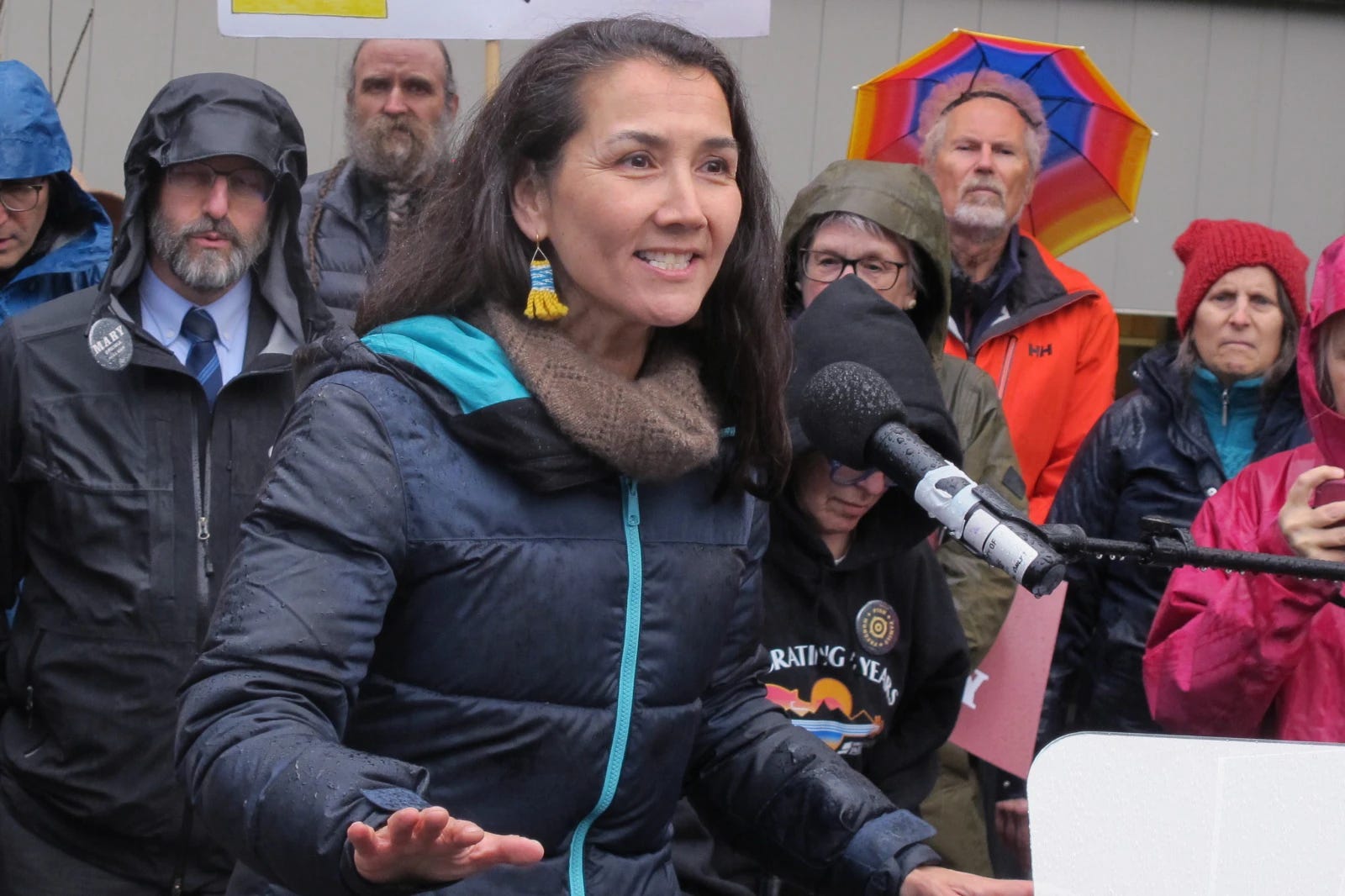
With 93% of precincts reporting, Peltola led the field with 48% of the vote. The incumbent received 42.8%, according to the state’s election results.
Alaska has not had a Democratic senator since Mark Begich’s term ended in January 2015. The state now represents one of the four pickups Democrats need to take the chamber.
Peltola previously held Alaska’s sole House seat and has cultivated a moderate image. Alaska places every candidate on the same primary ballot, advances the four leading finishers and uses ranked-choice voting in the general election. That format could allow Peltola to accumulate support from independents and voters whose first-choice candidates are eliminated.
The primary acquired an unusual complication from a second Republican candidate named Dan Sullivan. Retired schoolteacher Dan J. Sullivan stood in third place with 2.4% of the vote.
Republican officials tried unsuccessfully to remove him from the ballot. The Alaska Supreme Court ruled that he was qualified to run, leaving election officials to distinguish between the two candidates through their middle names and the incumbent designation.
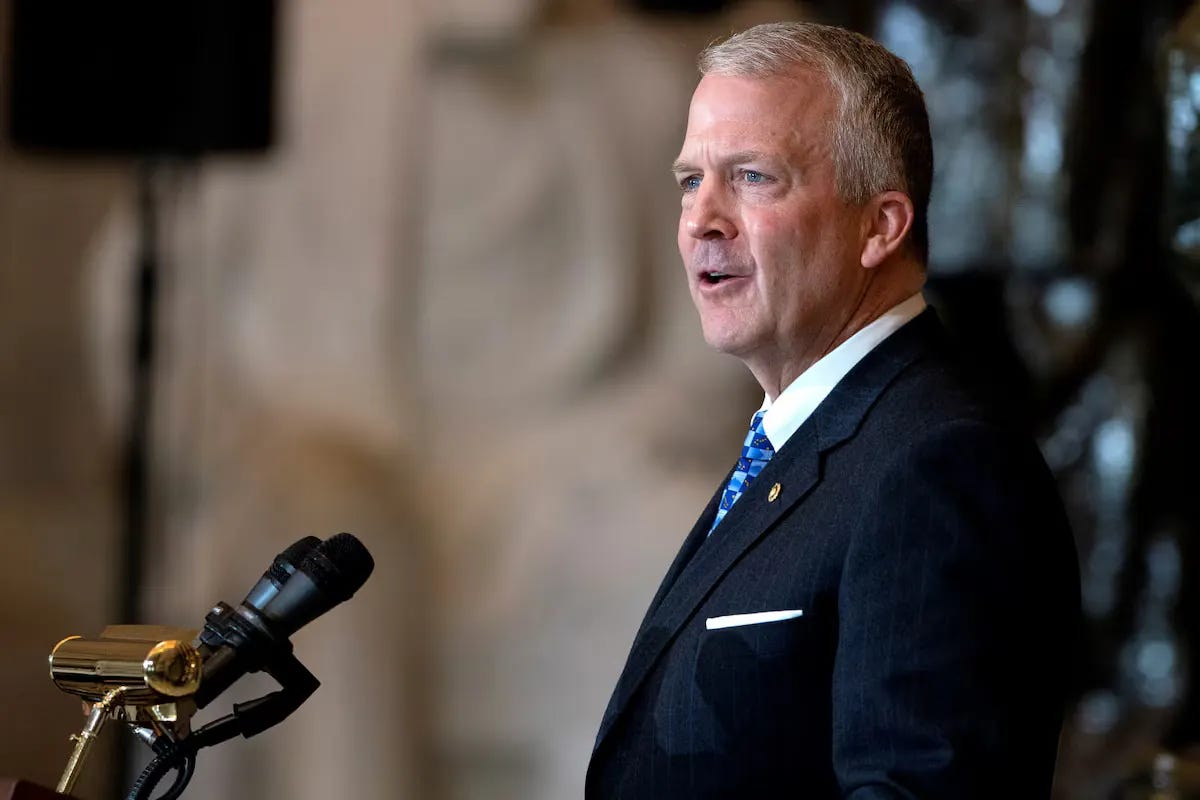
Trump called the challenger an “imposter.” The Justice Department issued subpoenas in an investigation into whether he entered the race to confuse voters and divert support from the senator, according to a person familiar with the inquiry. Dan J. Sullivan has denied that confusing voters was his purpose.
Alaska’s House primary also sent Republican Rep. Nick Begich III and independent Bill Hill to the general election. Hill, a retired school administrator and fisherman, previously supported a Democratic candidate financially.
Veteran Democrats Clear the Redistricting Test
Two longtime Florida Democrats survived their first elections under congressional boundaries designed to expand Republican power in the state’s House delegation.
Rep. Jared Moskowitz defeated Oliver Larkin, a union organizer supported by the Democratic Socialists of America. Moskowitz will face former Boca Raton Mayor Scott Singer, a Republican, in one of Florida’s few House races expected to remain competitive in November.
Rep. Debbie Wasserman Schultz secured the Democratic nomination in a historically Black Broward County district. The victory kept the veteran lawmaker first elected in 2004 on course for another term.

Wasserman Schultz, who is white, faced criticism from activists concerned about the loss of Black representation. The dispute followed an April Supreme Court decision that sharply restricted the Voting Rights Act and made minority-vote challenges to congressional maps more difficult.
Florida’s Republican-controlled Legislature enacted the new congressional boundaries this spring. The plan could produce a delegation of 24 Republicans and four Democrats, placing as many as four Democratic seats in jeopardy.
States generally redraw congressional boundaries after the census at the start of each decade. Trump encouraged Republican-led states to undertake another round before the midterm elections to protect the party’s narrow House majority. Democratic-led states pursued their own maps in response, turning district lines into a national struggle for control of Congress.
Florida’s primary also removed one Republican vulnerability. Former television news anchor Ryan Elijah defeated Rep. Cory Mills in a central Florida district.
Mills entered the election under a House Ethics Committee investigation covering allegations of campaign finance violations, sexual misconduct and dating violence. He has denied wrongdoing.
Democrats had viewed the district as a possible pickup if Mills remained the Republican nominee. Elijah’s victory leaves them facing a new candidate in a seat regarded as reliably Republican.

A Quick Ask: Because Independent Journalism Does Not Fund Itself.
Press freedom does not survive on vibes. It survives because readers decide the work is worth protecting. The Developer is independent, ad-free, and reader-funded—which means your support goes directly into the reporting, not into some billionaire’s pocket. If my work helps you stay informed, consider upgrading to paid: $8/month or $80/year. If upgrading isn’t possible right now, sharing The Developer with someone who needs to read it matters just as much. Help keep independent journalism alive and impossible to buy.


I disagree vehemently.
We have to stop downplaying and disparaging our candidates for their progressive policies because that’s what the PEOPLE want and need. Stop being afraid of what you don’t understand and learn more about it. This primary result should be a point of reference and not a point of dissemination of fear of change.